
TESTA
Initial survey of Testa confirms a shell-bound world shaped by layered accretion and later disturbance. Surface regions display disciplined striations consistent with long-term, ordered growth, interrupted by compression zones, fracture lines, and hollowed voids that expose deeper structural history. In several areas, secondary material appears to have formed across older surfaces, softening or obscuring original patterns rather than replacing them entirely. The result is a terrain that reads less as static geology and more as an evolving system, where formation and disruption coexist. No clear indicators of active motion were observed, though certain regions suggest processes that may still be ongoing beneath the surface. Continued study is recommended, particularly along transitional boundaries where older structures give way to altered terrain.
THE BLOOMING VEIL
The Blooming Veil reveals a surface that appears to be in a state of slow transformation, as though the crust itself is breathing color into existence. Vast oxide plains stretch outward in rusted gradients, interrupted by pale, cloud-like formations that resemble mineral blooms or colonies of dormant life. These lighter regions seem to spread along subtle channels, suggesting a process of seepage or growth rather than erosion. The boundary between strata is indistinct, as if the terrain is less a fixed surface and more a living skin—one that stains, heals, and reshapes itself over time. No discrete structures have been identified, yet the distribution of color implies an underlying system, possibly biological, quietly at work beneath the veil.
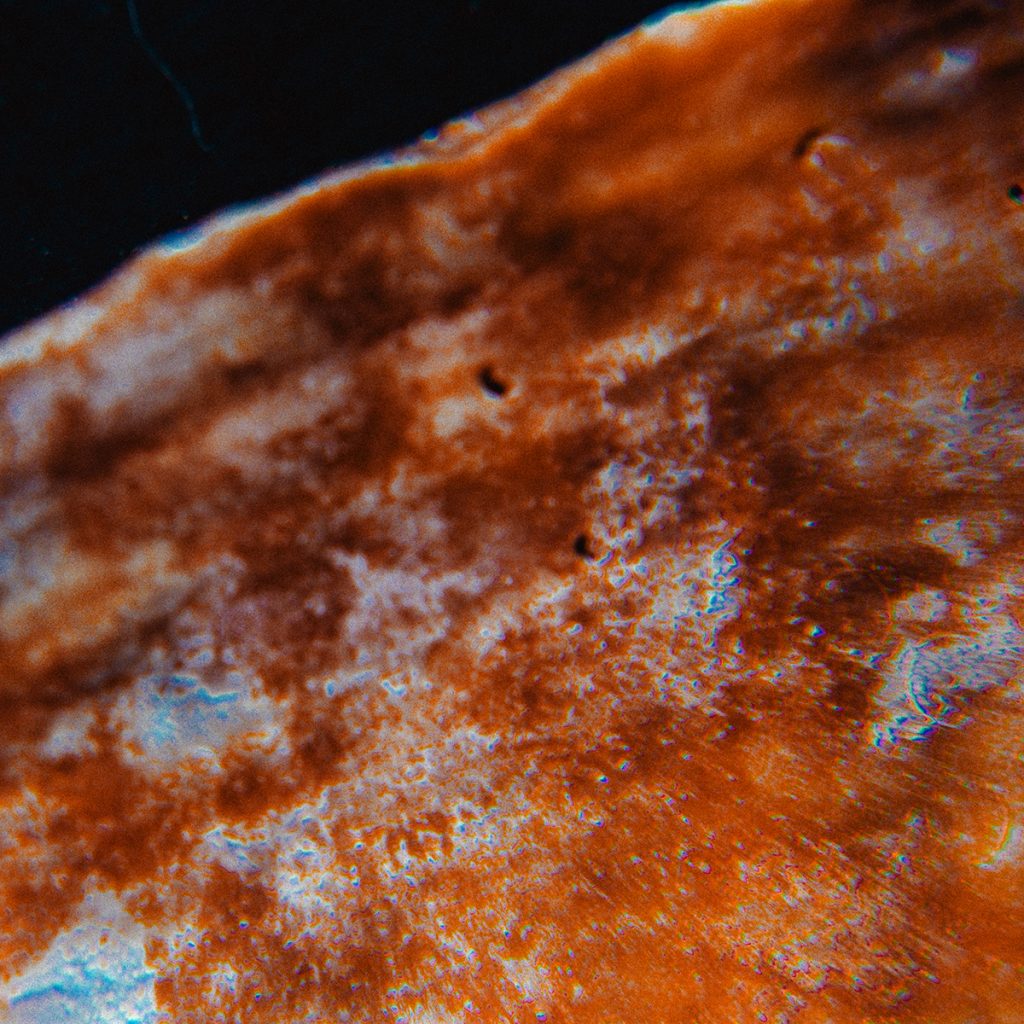
The Oxide Plains present a wide, weathered expanse where iron-rich deposits appear to have spread and settled in uneven waves, forming a mottled terrain of deep rust and pale mineral bloom. The surface bears no sharp fractures or impact signatures, instead suggesting a slow, saturating process—perhaps the result of atmospheric condensation or subsurface seepage rising through a porous crust. Lighter regions cluster in irregular patches, as if something once attempted to colonize the plains but never fully took hold. Subtle textural ripples run across the field, hinting at past movement, though whether liquid, gas, or something less familiar remains unclear. The entire region feels suspended between dormancy and quiet activity, as though the plains are not dead, merely waiting.
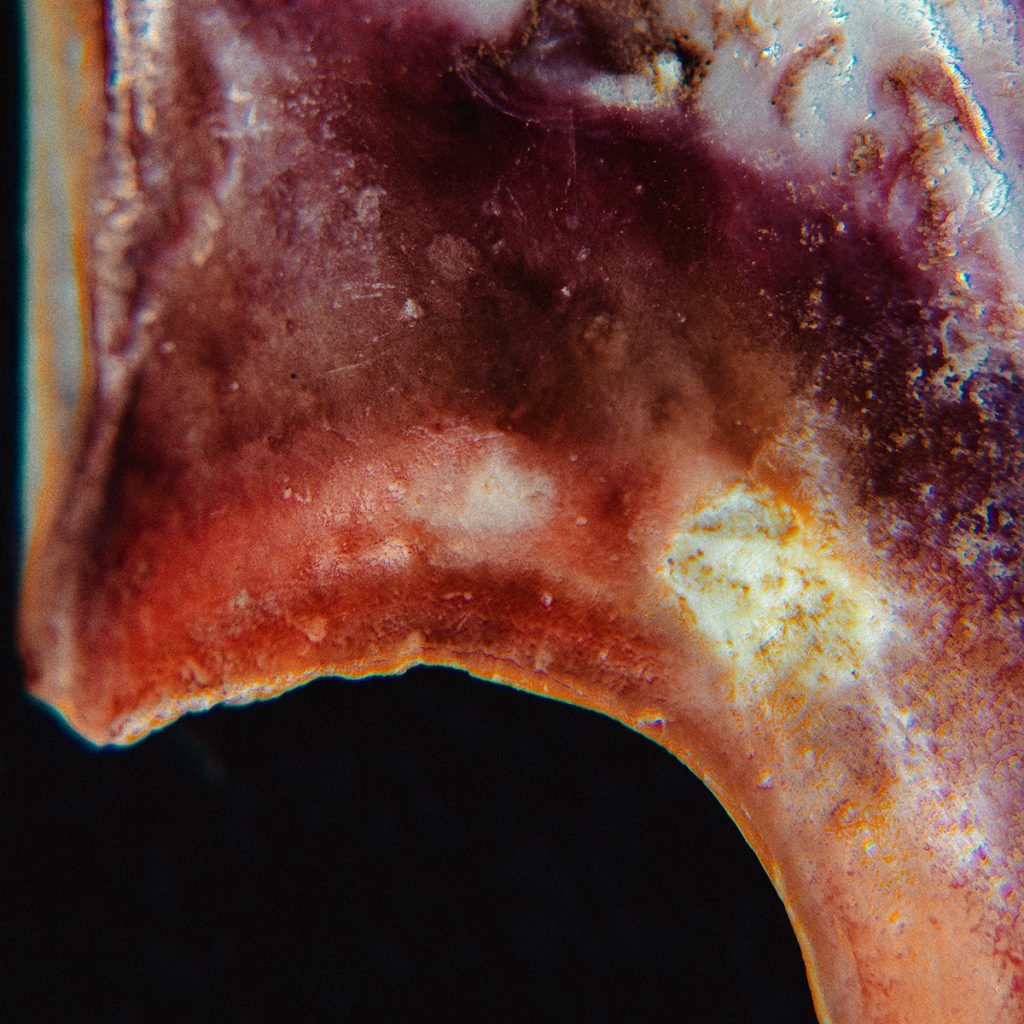
The Veil’s Edge marks a distinct boundary where the saturated plains of the Blooming Veil give way to a denser, more consolidated structure. The terrain curves sharply into a smooth, darkened void, suggesting either a sudden drop in elevation or the presence of an absorbing material that resists illumination. Mineral concentrations intensify along this boundary, forming brighter deposits that appear to gather at the threshold, as if drawn toward it. The surface here is less diffuse than the surrounding plains, with subtle hardening and compression visible in the texture. Whether this edge represents erosion, collapse, or a transition into an entirely different environmental state remains uncertain—but its presence implies that the Veil is not infinite, and whatever lies beyond it may operate under very different rules.
THE FRACTURE VERGE
The Fracture Verge marks a transitional boundary along Testa where structural integrity begins to fail in distinct and varied ways. Unlike a single continuous break, the Verge is composed of multiple localized formations—escarpments, vents, basins, and ridges—each expressing a different response to underlying stress. Some areas appear actively tearing, with sharp fractures and suspended connections, while others show signs of prolonged chemical alteration, where material softens, migrates, or redistributes across the surface. Layered structures are frequently exposed at the boundary, suggesting that deeper composition is being revealed as the outer shell gives way. The adjoining void behaves inconsistently, at times sharply defined and at others absorbing light in ways that imply depth or compositional change beyond observation. Taken together, the Fracture Verge does not read as a single event, but as an ongoing process—a region where Testa is not merely eroding, but actively transitioning into something else, governed by forces that remain only partially understood.
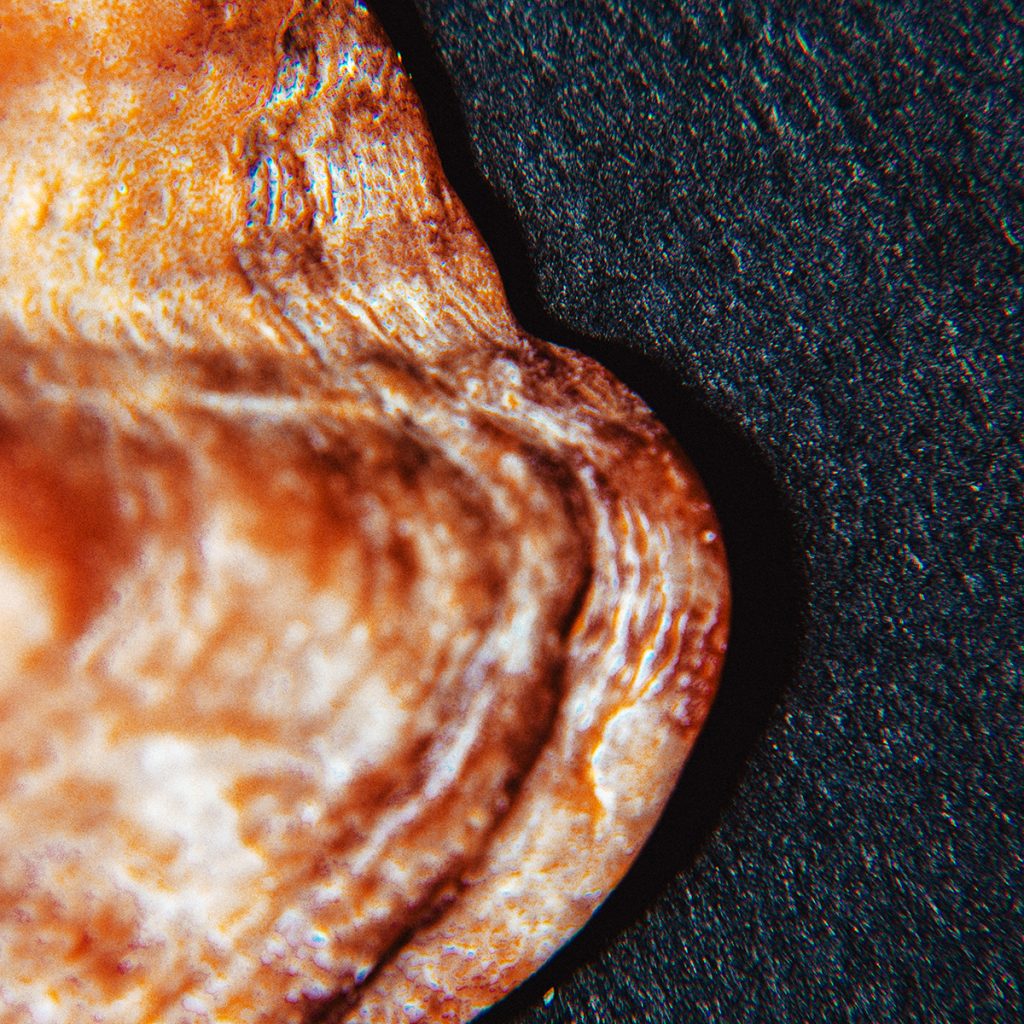
Initial imaging of the Fracture Verge reveals a sharply defined boundary where the structured formations of Testa terminate in an abrupt, irregular drop. The escarpment appears neither cleanly broken nor naturally eroded, but instead torn along a line of internal weakness, exposing layered material that curls and compresses at the edge. Surface tension patterns suggest long-term stress rather than sudden impact, with mineral deposits thickening along the fracture as if drawn outward over time. The adjoining void absorbs light unevenly, hinting at a change in composition beyond the boundary. This region does not behave like a coastline or cliff—it feels more like a failure point, where the integrity of the world itself begins to give way.
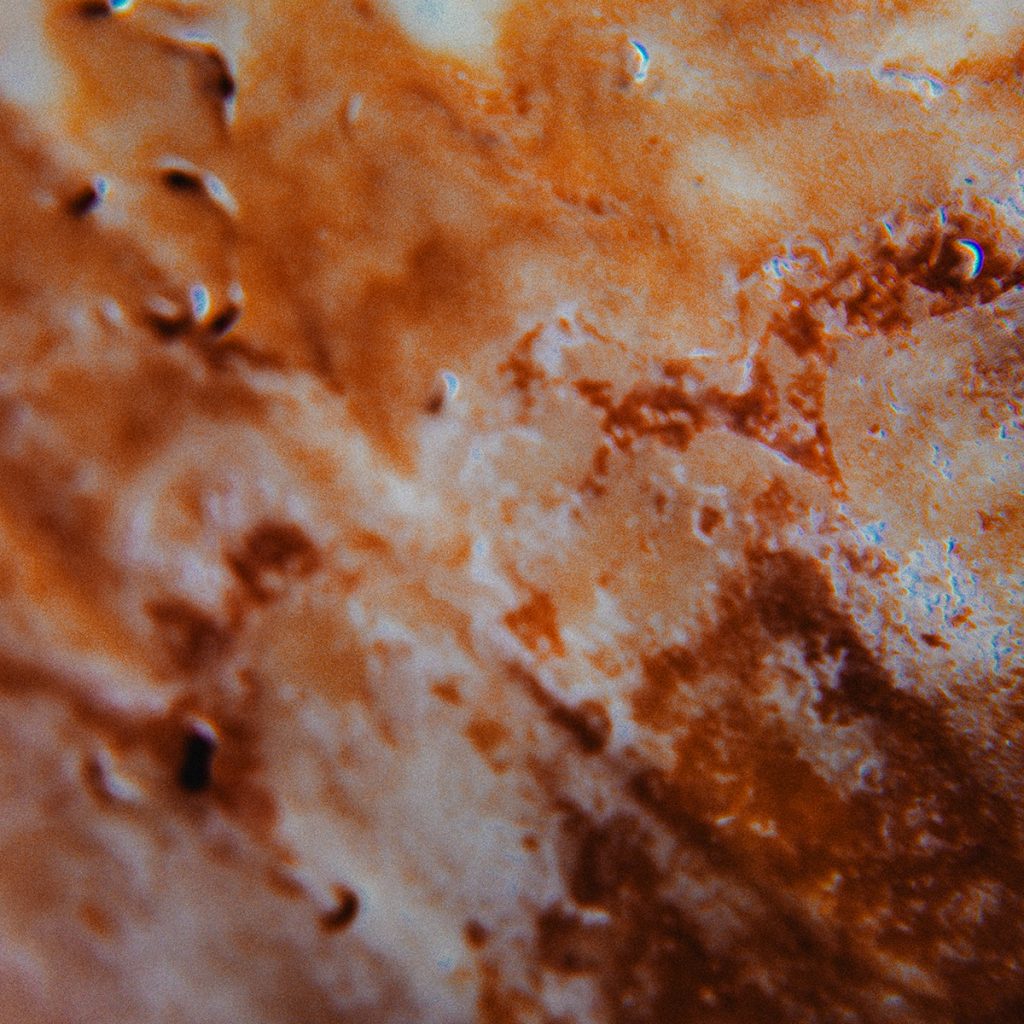
The Oxide Basin presents a markedly different surface behavior from the Verge escarpment, with diffuse mineral staining spreading across a softened, irregular terrain. The coloration appears to bloom outward rather than settle, forming branching patterns that resemble slow chemical migration or biological creep. Small depressions and scattered nodules interrupt the surface, suggesting localized activity or the breakdown of underlying structure. The material here lacks the tension seen at the fracture edge, instead appearing saturated—almost overworked—as if subjected to prolonged exposure to reactive processes. The basin does not read as stable ground; rather, it feels transitional, a region where matter is being quietly altered, redistributed, or undone.
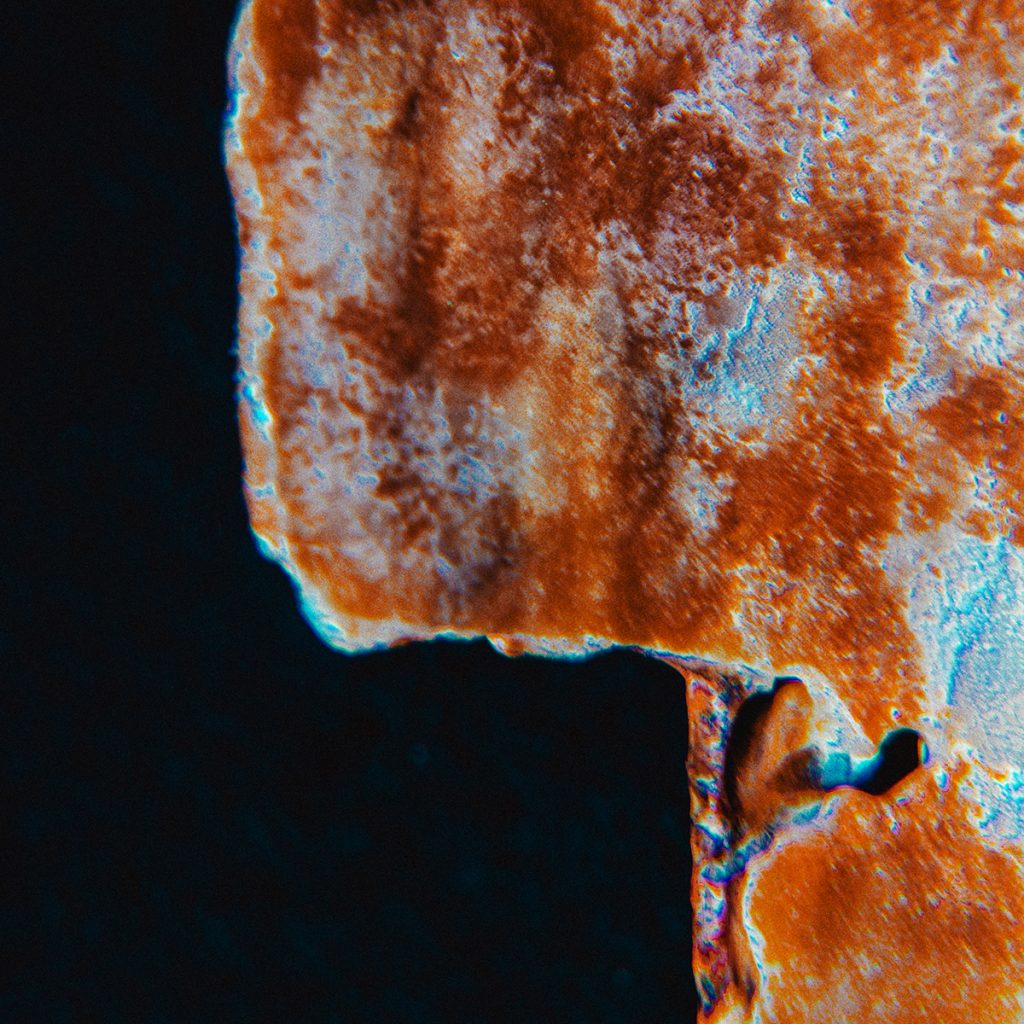
The Rust Escarpment forms a stark overhang at the Verge, where surface material juts outward before collapsing into a narrow, shadowed separation below. Unlike the broader fracture boundary, this region appears constricted and tension-bound, with a thin connective span suggesting incomplete separation. Oxide concentrations are dense here, clinging to edges and seams as if drawn into the fracture itself, reinforcing the sense of active stress. The upper mass retains a brittle solidity, while the lower region recedes into darkness, implying depth beyond what imaging can resolve. This is not a settled formation—it reads as a moment held mid-failure, where structural integrity persists only by the smallest remaining connection.
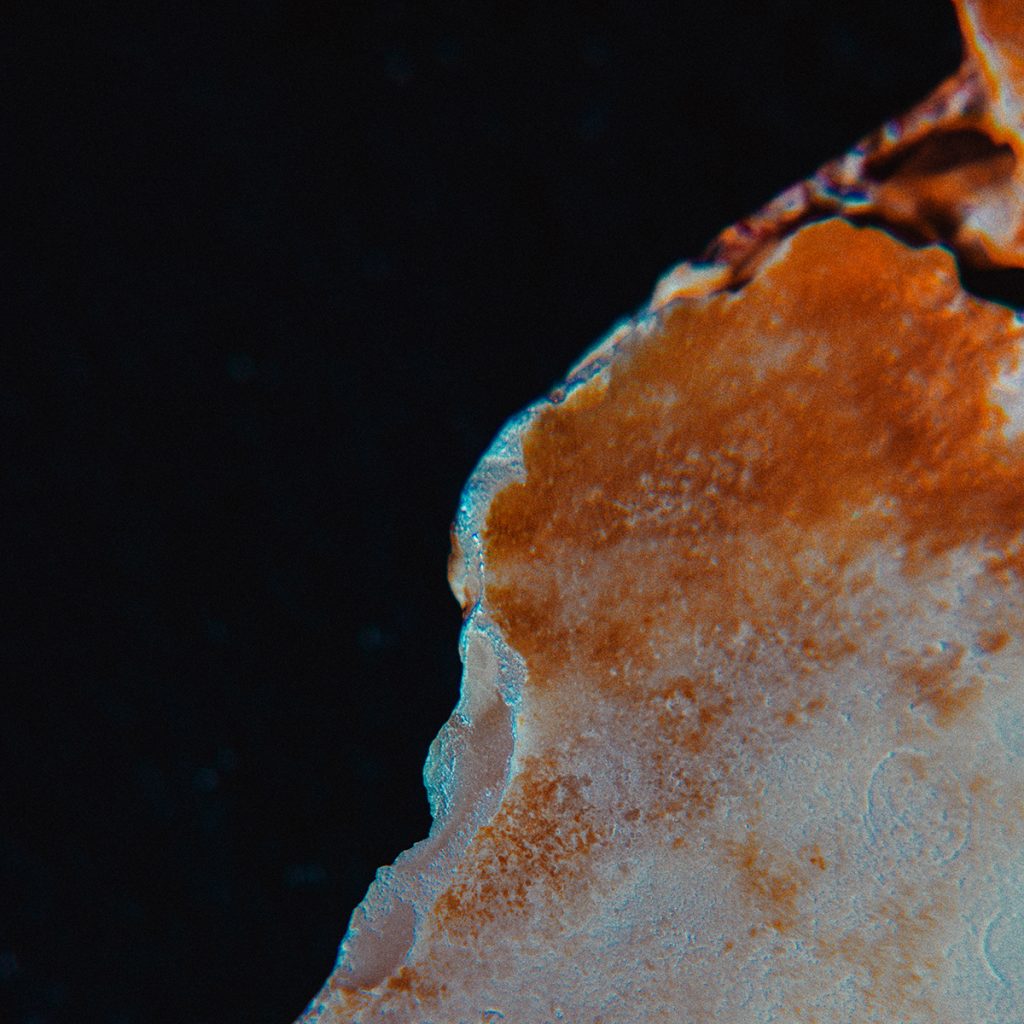
Section II of the Rust Escarpment shows a more subdued but no less unstable formation, with the fractured edge worn into a smoother, receding profile. The surface here appears partially consolidated, as if earlier structural failure has given way to a slower process of compression and settling. Oxide deposits remain present but less concentrated, diffused across the face rather than drawn into active seams. The boundary between mass and void is less abrupt, suggesting gradual erosion or material loss over time rather than immediate rupture. Despite this relative calm, the edge retains a fragile quality, its softened contours implying that the forces responsible for the initial fracture have not ceased—only slowed, continuing their work beneath the surface.
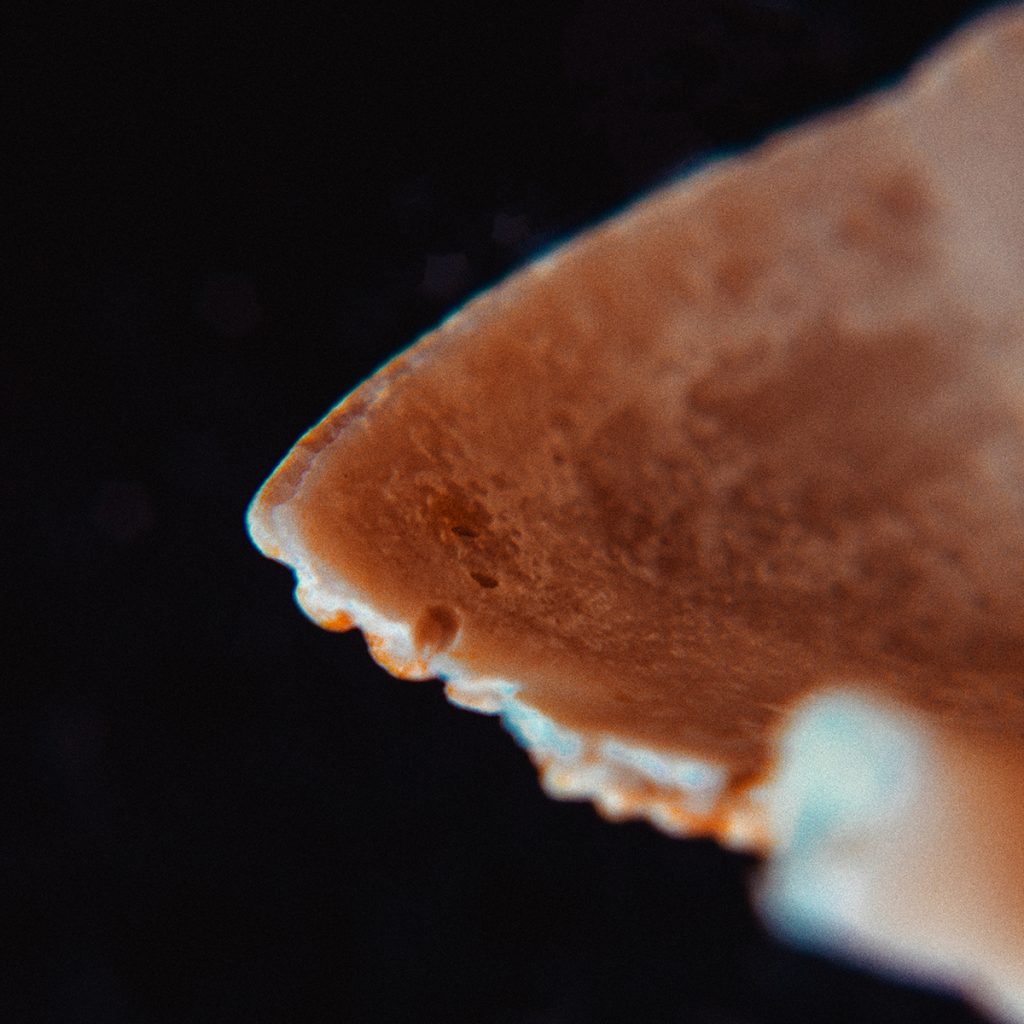
Cape Ferrum extends outward from the Verge as a thin, tapering projection, its edge scalloped and irregular as though shaped by persistent material loss. The surface appears more uniform than surrounding regions, with oxide coloration evenly distributed across a subtly curved plane. Along the lip of the formation, fine serrations suggest gradual erosion rather than fracture, with small sections thinning to near-translucence before breaking away. The boundary between mass and void is sharply defined, but lacks the tension seen in adjacent escarpments, implying a slower, more continuous process of degradation. Despite its fragile appearance, the cape holds its form—for now—balanced between cohesion and dissolution, as if the loss of material is steady enough to preserve its shape even as it disappears.
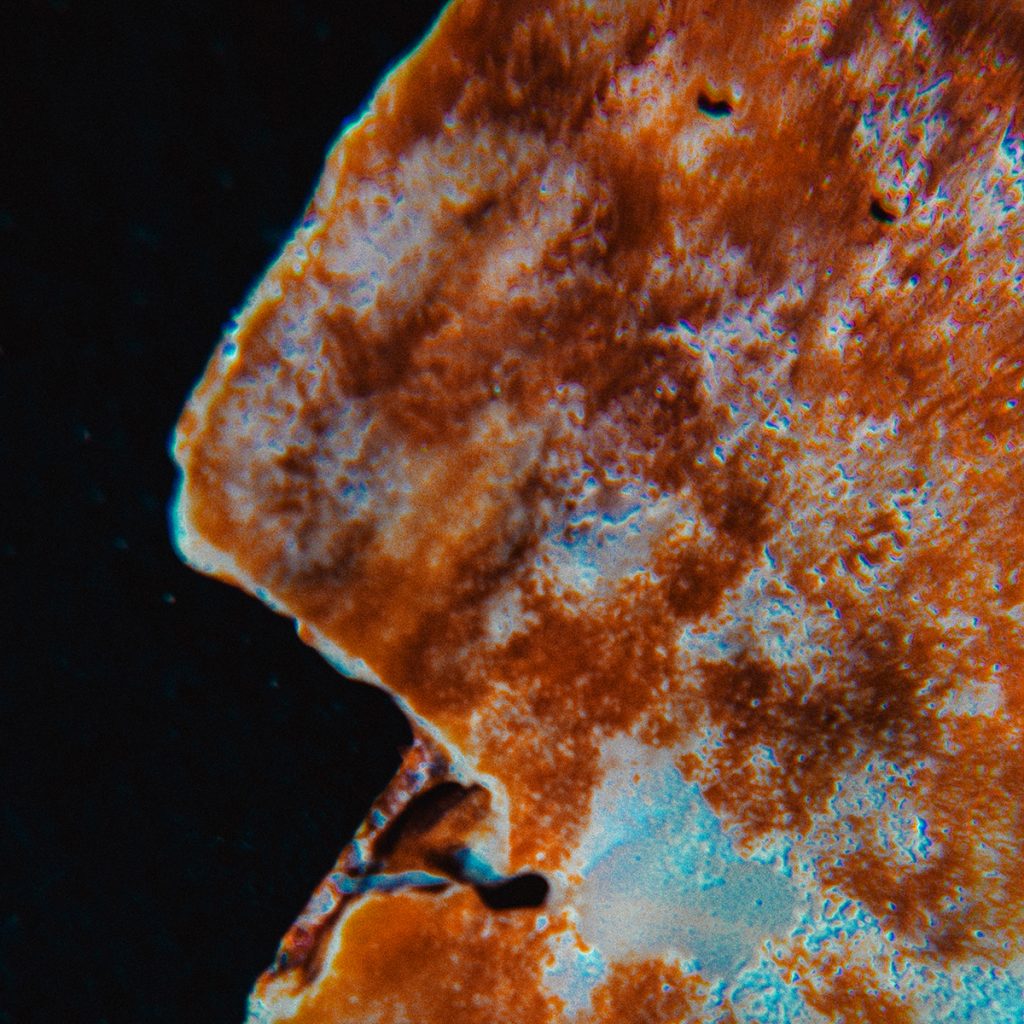
The Ferrum Vent appears as a narrow rupture within a heavily oxidized field, where material has separated just enough to form a distinct, channel-like opening. Unlike broader fractures in the Verge, this structure is localized and directional, suggesting a focused release rather than widespread failure. The surrounding surface shows dense mineral saturation, with oxide deposits clustering along the edges of the vent as though drawn to the opening. The interior remains partially obscured, absorbing light in a way that implies depth disproportionate to its visible width. The formation suggests intermittent activity—either venting, seepage, or the slow extrusion of material from below. This is not a passive feature; it reads as an active point of exchange between layers, where the interior of Testa briefly exposes itself before closing again.
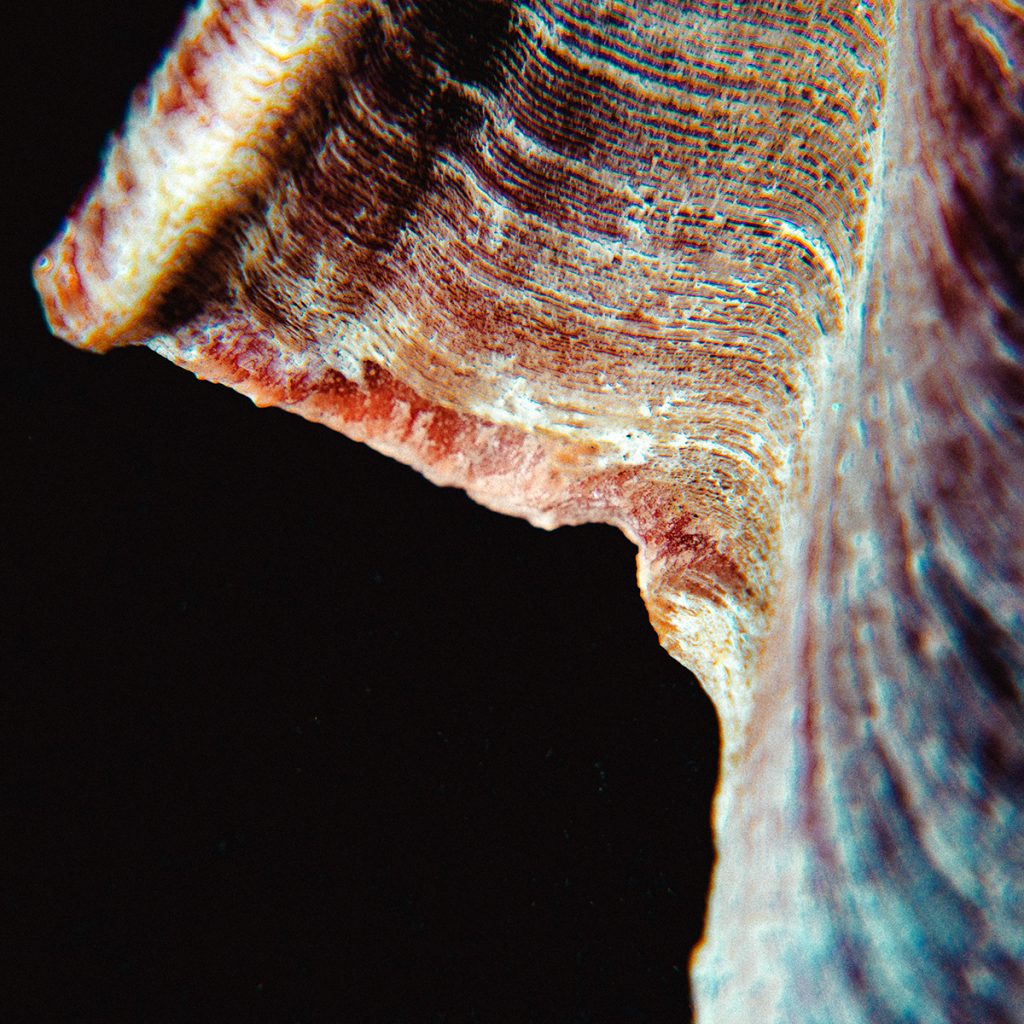
The Strata Chasm exposes a sharply incised boundary where layered material terminates against an open void, revealing tightly banded structures that curve and compress along the edge. These strata appear continuous across the surface, suggesting long-term accumulation or growth, yet are abruptly interrupted at the chasm, as if cleanly removed rather than eroded away. The interior edge is smooth in places and sharply defined in others, indicating uneven resistance within the layered composition. Subtle color variation between bands hints at shifts in material density or chemical composition over time. Unlike the broader Verge formations, this region reads as precise—almost deliberate—where the layered history of the surface is cut open and left exposed, offering a rare glimpse into the internal structure before it drops away into darkness.
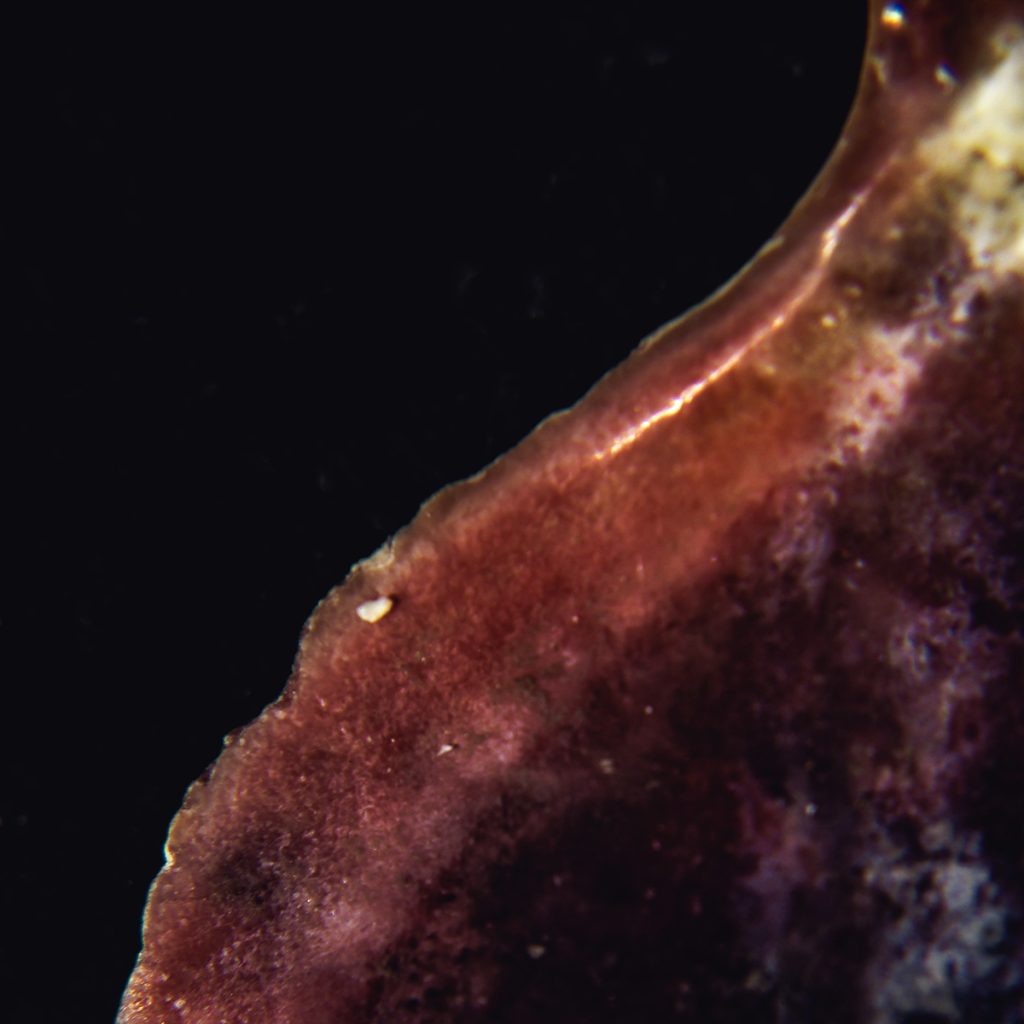
The Crimson Highlands rise along the Verge as a smooth, elevated formation, marked by a continuous slope rather than abrupt fracture. The surface is heavily saturated with deep red mineralization, forming a cohesive layer that appears less disrupted than surrounding regions. Subtle variations in tone and density suggest gradual deposition rather than active stress, with the terrain maintaining a consistent curvature toward the edge. The boundary with the void is clean and uninterrupted, lacking the tearing or collapse seen elsewhere along the Verge. Despite its relative stability, the coloration and uniformity imply prolonged exposure to the same processes affecting adjacent formations, suggesting this region endures rather than escapes them—holding its shape even as the environment continues to shift around it.
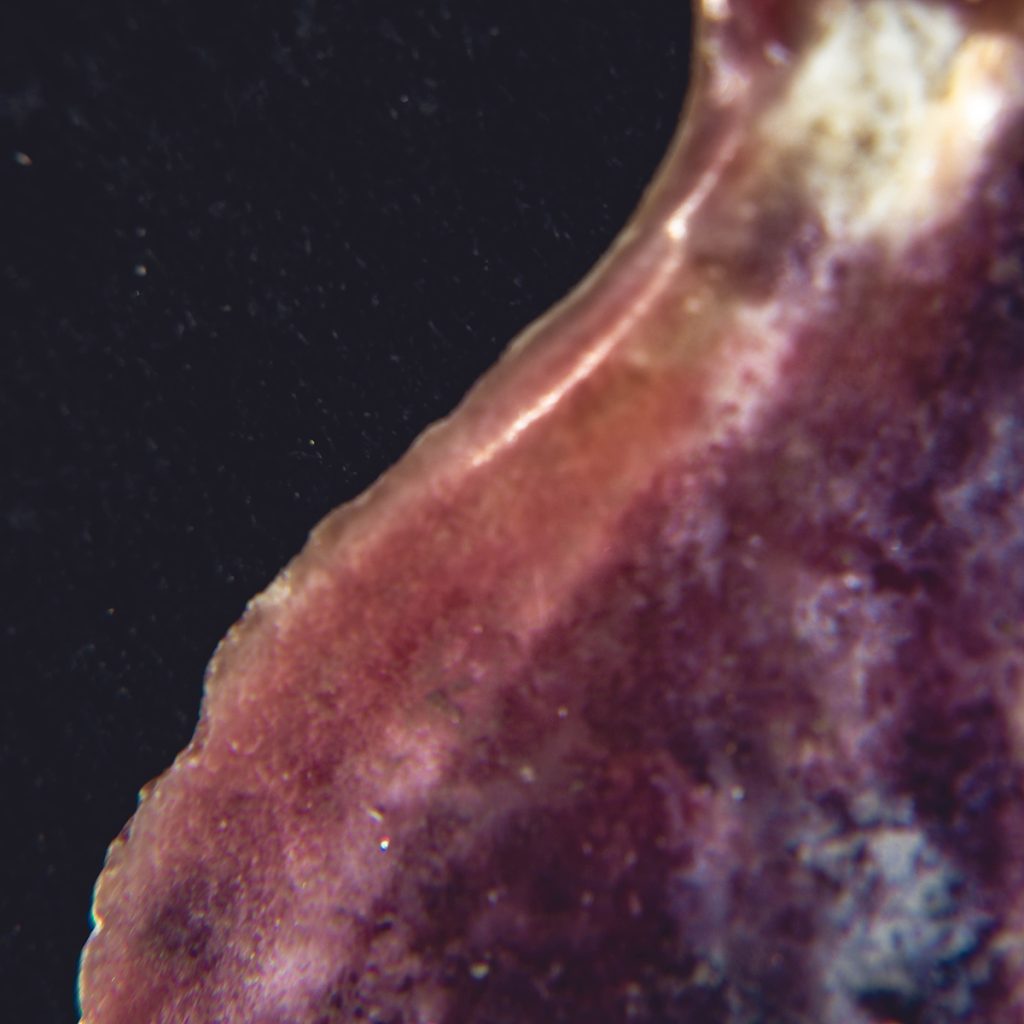
Ironcrest Ridge traces a narrow, elevated boundary along the Verge, its form defined by a continuous rise that sharpens toward the edge before dropping into open void. The surface is densely mineralized, with iron-rich deposits lending a darker, more cohesive appearance than adjacent terrain. Unlike the broader highlands, this ridge maintains a distinct linear structure, suggesting compression along a sustained stress line rather than diffuse accumulation. The crest itself appears slightly hardened, as though repeated exposure has reinforced the formation over time. While the surrounding regions show signs of breakdown and redistribution, Ironcrest holds its line—an enduring boundary that resists collapse, even as the terrain on either side continues to shift.
THE FRACTURED VERGE: THE COMPRESSION SCAR
The Compression Scar marks a zone within the Fracture Verge where the surface has not fractured cleanly, but instead absorbed and retained sustained pressure, resulting in tightly compacted structures and localized deformation. Material here appears drawn inward, stretched, and realigned, forming ridges, sealed vents, and concentrated anomalies that suggest force applied over extended periods rather than a single catastrophic event. Unlike the open fractures of the Verge, the Scar is characterized by containment—energy redirected into the surface rather than released through it. Layering is often preserved but distorted, with mineral deposits clustering along lines of stress or gathering at points of compression. The region reads less as a break and more as an imprint, where the planet has been pressed, reshaped, and left altered—holding the memory of that force in its structure long after the event itself has passed.
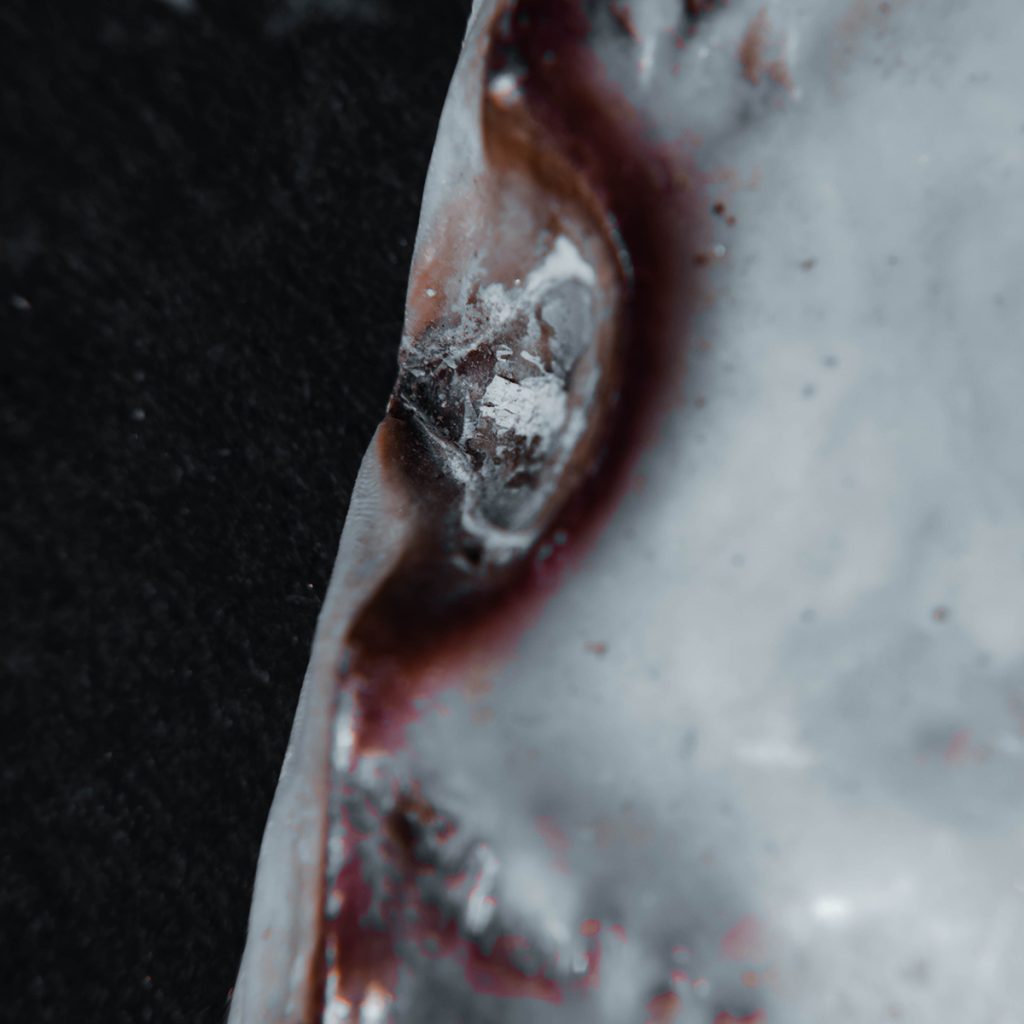
The Silver Vent is embedded within the Compression Scar as a localized deformation rather than a true rupture, where surface material appears pressed inward and partially displaced before stabilizing. The surrounding region shows clear signs of compression, with the outer layer drawn tight and slightly discolored, forming a shallow basin around the vent itself. At the center, a pale, reflective deposit contrasts sharply with the darker, stressed material, suggesting either exposed subsurface composition or the accumulation of extruded minerals. The structure lacks the open depth seen in other vents along the Verge, instead appearing sealed or intermittently active, as if pressure once forced material outward but has since diminished. This formation does not read as a break in the surface, but as a scar—evidence of force applied, absorbed, and retained.
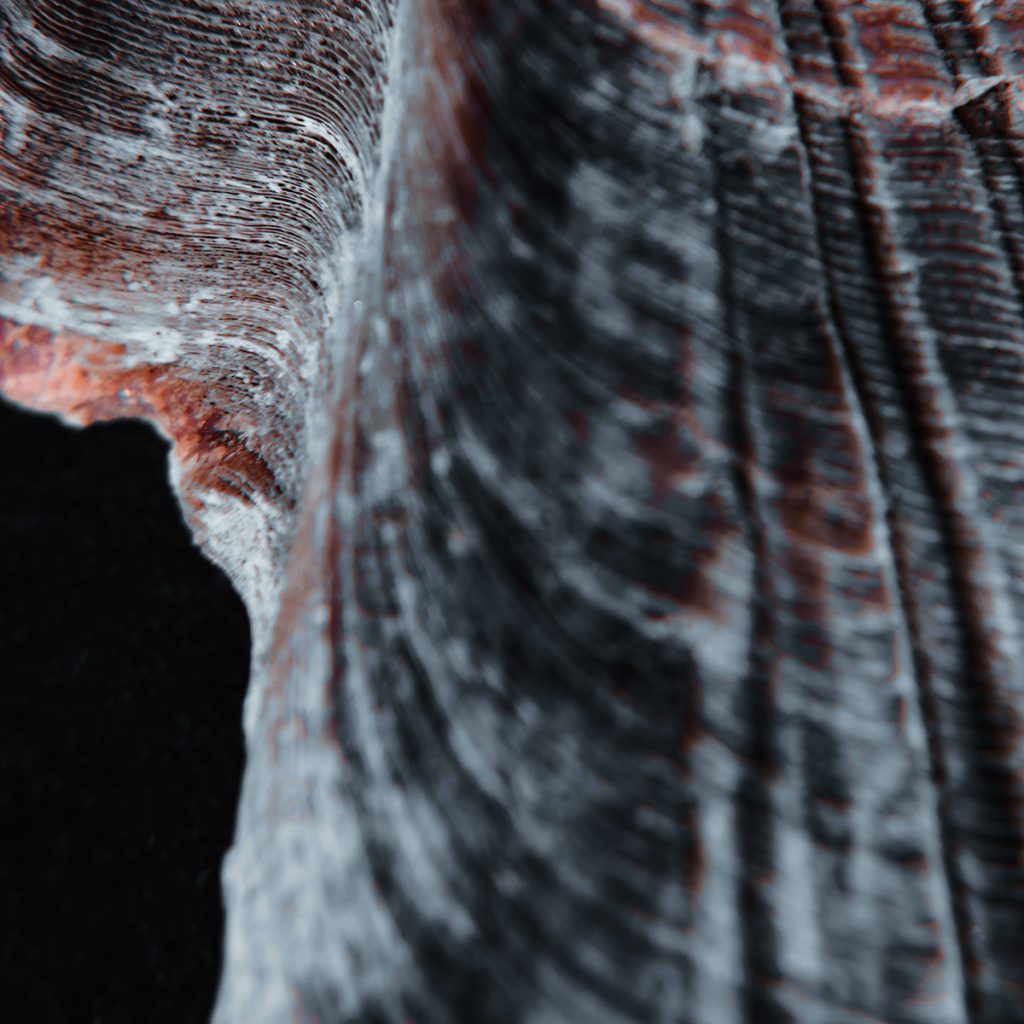
The Iron Escarpment defines a steep, vertically oriented boundary within the Compression Scar, where layered material has been drawn upward and compressed into dense, parallel ridges. Unlike the exposed strata of the Verge, these bands appear tightened and elongated, suggesting sustained pressure rather than separation. The surface shows a pronounced directional flow, with mineral deposits concentrated along the vertical lines as though pulled into alignment during deformation. The edge itself is sharply cut, dropping into shadow with little transitional slope, reinforcing the sense of abrupt structural displacement. This formation does not read as fractured or eroded—it appears forced into its current shape, a rigid wall of compressed history where the material has been reshaped but not released.
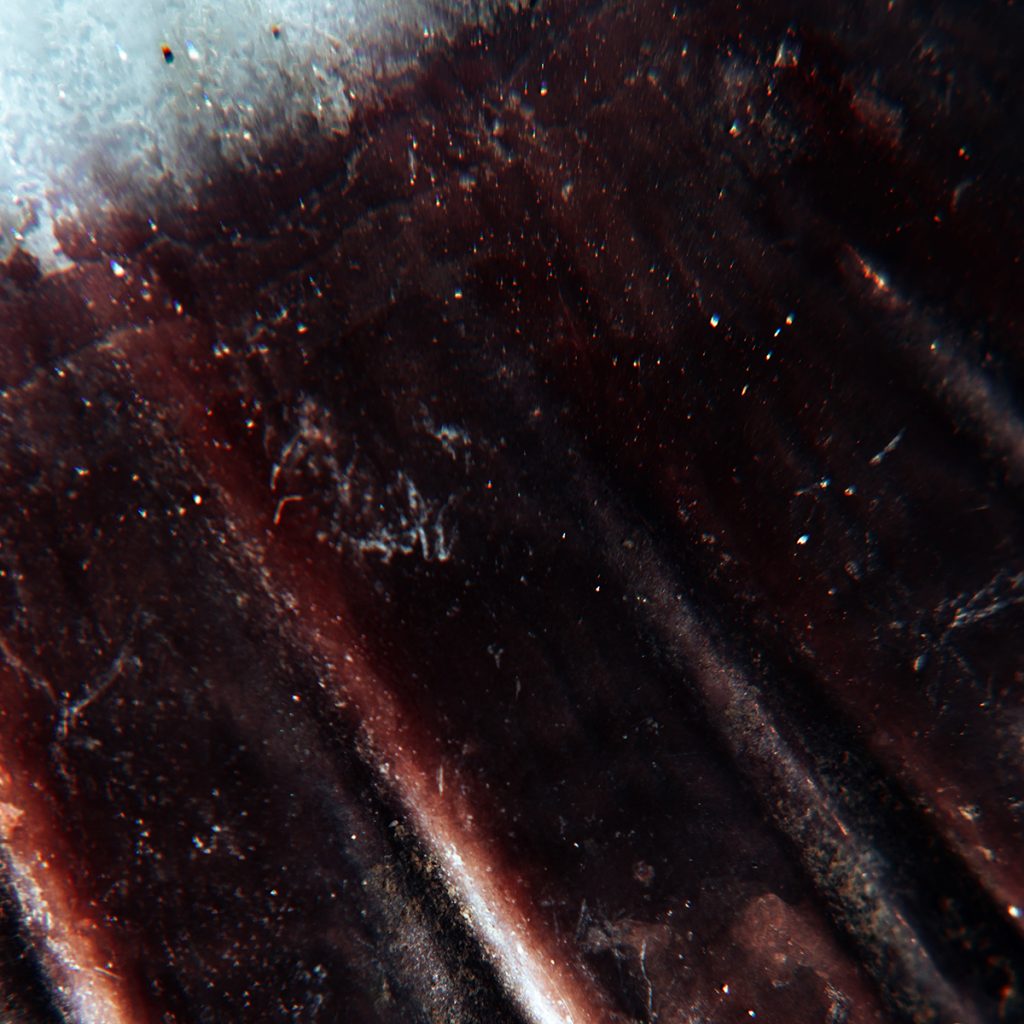
The Ferrum Rifts cut through the Compression Scar as a series of narrow, parallel separations within an otherwise densely compacted surface. Unlike the rigid vertical alignment of the Iron Escarpment, these channels appear to have shifted laterally, creating elongated troughs that suggest movement along the plane rather than perpendicular to it. The surrounding material remains heavily saturated with iron-rich deposits, which collect along the edges of the rifts, emphasizing their direction and continuity. Fine particulate scatter across the surface indicates ongoing abrasion or micro-fracturing, as though the region continues to adjust under residual stress. These are not open fractures in the traditional sense, but controlled failures—zones where compression exceeded cohesion and the surface responded by sliding, rather than breaking apart entirely.
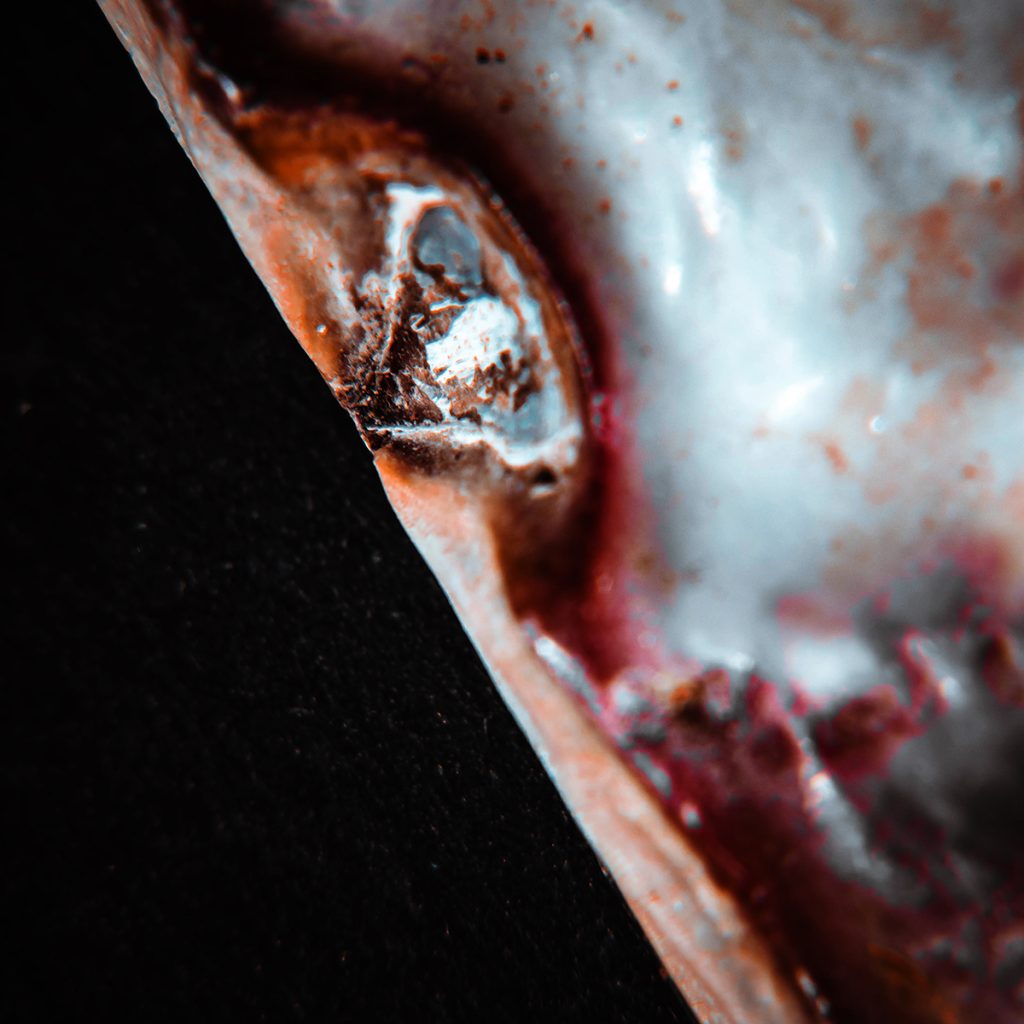
PLATE TES FV CS 004 — THE FERRIC EYEThe Ferric Eye presents as a circular, highly localized formation embedded within the Compression Scar, distinguished by a pale, reflective center surrounded by darker, oxidized material. The structure appears recessed yet intact, with the surrounding surface drawn inward in a shallow, radial pattern, suggesting a point of focused compression or extraction. Mineral deposits cluster irregularly along the inner boundary, as though pulled toward or expelled from the central feature. Unlike the Silver Vent, the Eye shows no clear opening or channel, instead presenting a sealed interface that reflects light more readily than the surrounding terrain. Its symmetry and containment set it apart from nearby deformation zones, giving the impression of a stabilized anomaly—one that marks a precise point of stress concentration, rather than a broader structural response.
THE FRACTURE VERGE: THE PITTED REACHES
Low-orbit imaging of the Pitted Reaches reveals a broad, gently curved expanse interrupted by irregular voids that puncture the surface without clear pattern or alignment. These depressions are smooth-edged and sharply defined, suggesting material removal rather than collapse, with little evidence of displaced debris surrounding them. The terrain between pits appears subtly textured and faintly iridescent, indicating a thin, possibly altered surface layer that differs from deeper structural regions. Light interacts unevenly across the field, with shallow gradients giving way to abrupt absorption at each opening, reinforcing the impression of depth beyond what can be resolved. Unlike the stress-bound formations of the Compression Scar, this region reads as selectively depleted—a landscape shaped not by pressure or fracture, but by extraction, as though portions of the surface have been quietly and repeatedly taken.
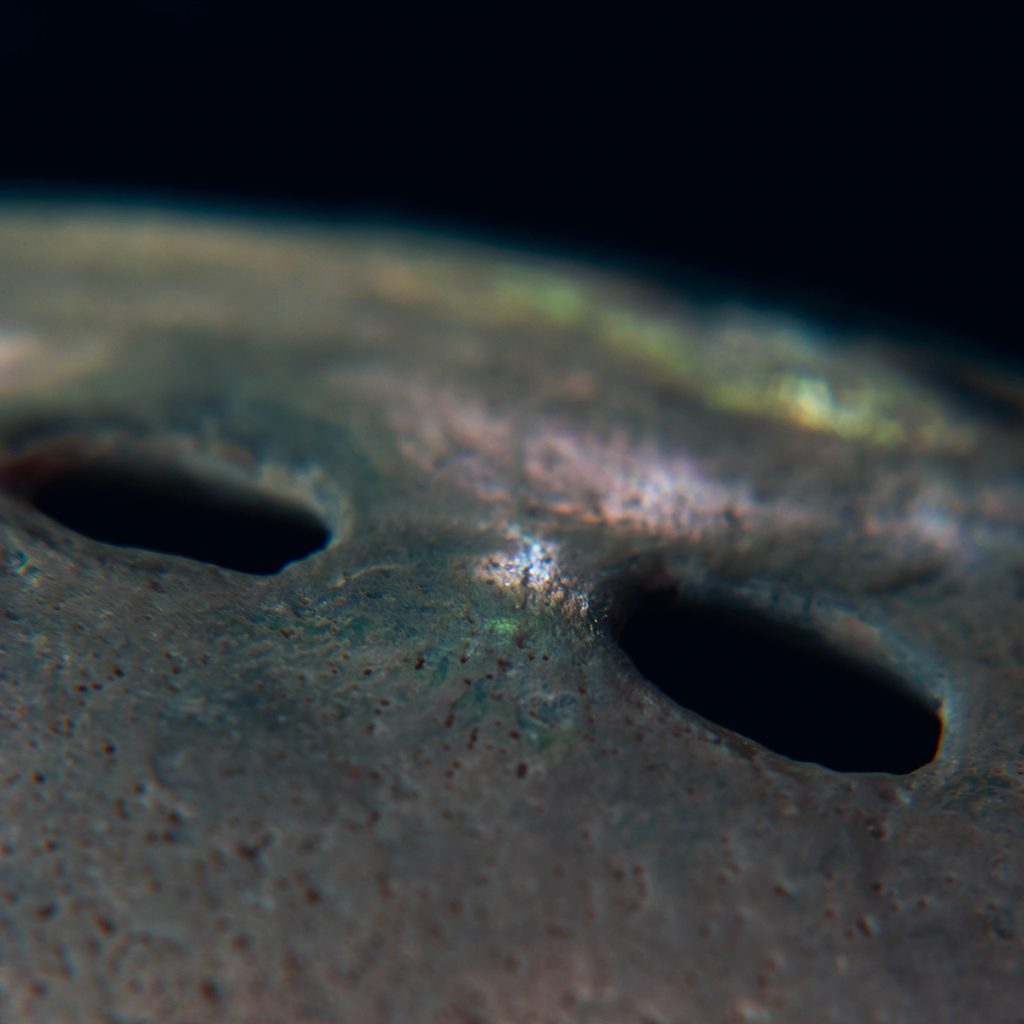
This plate captures a localized field within the Pitted Reaches where two primary voids dominate an otherwise continuous, gently contoured surface. The openings are smooth and rounded, with sharply defined edges that show minimal fracturing or collapse, suggesting material removal rather than structural failure. Surrounding terrain appears slightly raised and subtly compressed, forming shallow ridges between the depressions as if the surface has adjusted to their absence. Fine particulate speckling and faint iridescence across the exposed plane hint at a thin, reactive layer distinct from deeper material. The spacing and similarity of the pits imply repetition rather than randomness, giving the formation a patterned quality that contrasts with the more chaotic features of the Verge. This is not damage in the traditional sense—it reads as selective loss, where discrete portions of the surface have been removed cleanly, leaving behind a landscape defined as much by absence as by form.
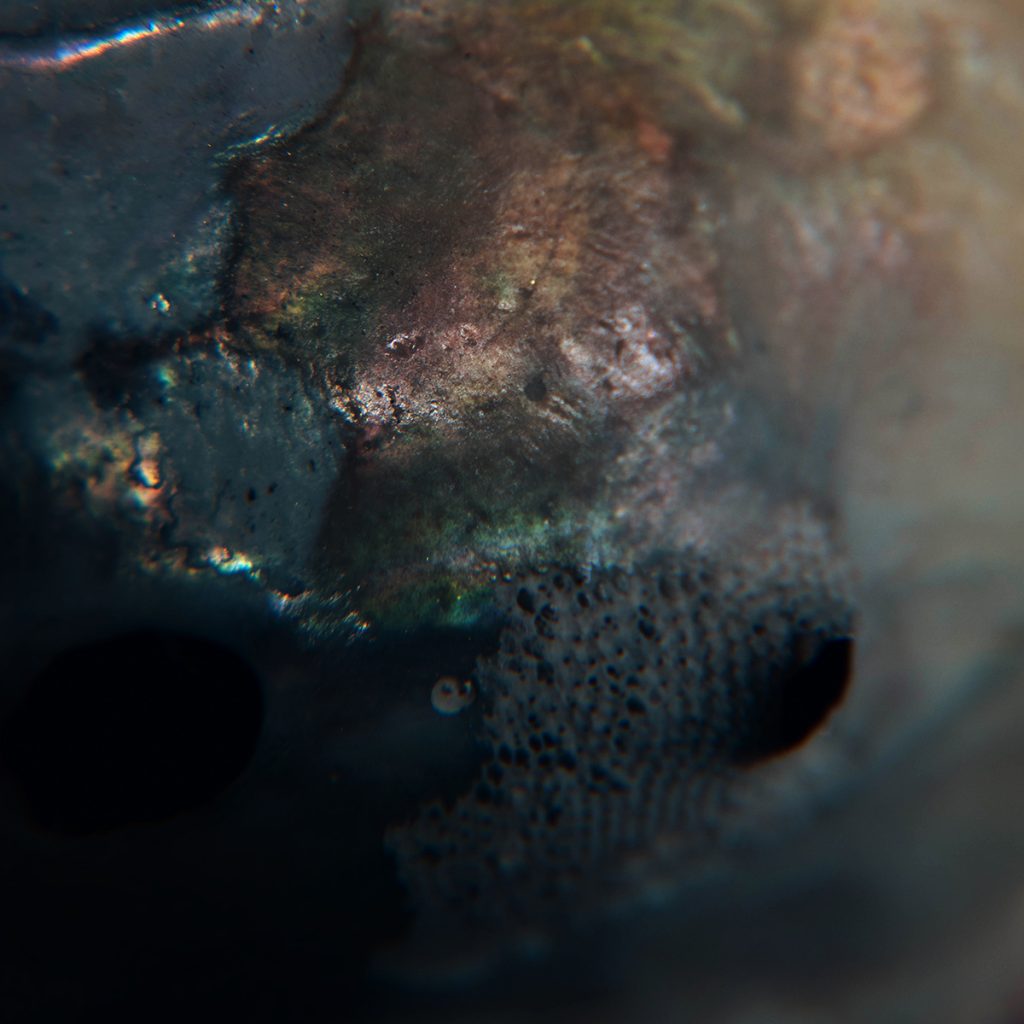
This plate documents a densely pitted section of the Pitted Reaches where surface perforations cluster into a concentrated field, forming a pattern that suggests repeated, localized activity. The vents vary in size and depth, with smaller apertures densely packed along one region while larger voids remain more isolated, creating a gradient of disruption across the surface. The surrounding material appears thinned and slightly luminous in places, as if altered by sustained exposure to whatever process created the openings. Unlike the broader, cleaner pits observed elsewhere, these formations show signs of interaction—edges softened, boundaries overlapping, and surface texture becoming increasingly granular toward the densest clusters. The arrangement does not appear random; it reads as cumulative, with each new vent forming in proximity to existing ones. This is not simple removal—it suggests a region where the surface is being repeatedly accessed, a field of persistent, small-scale exchanges between exterior and interior layers.
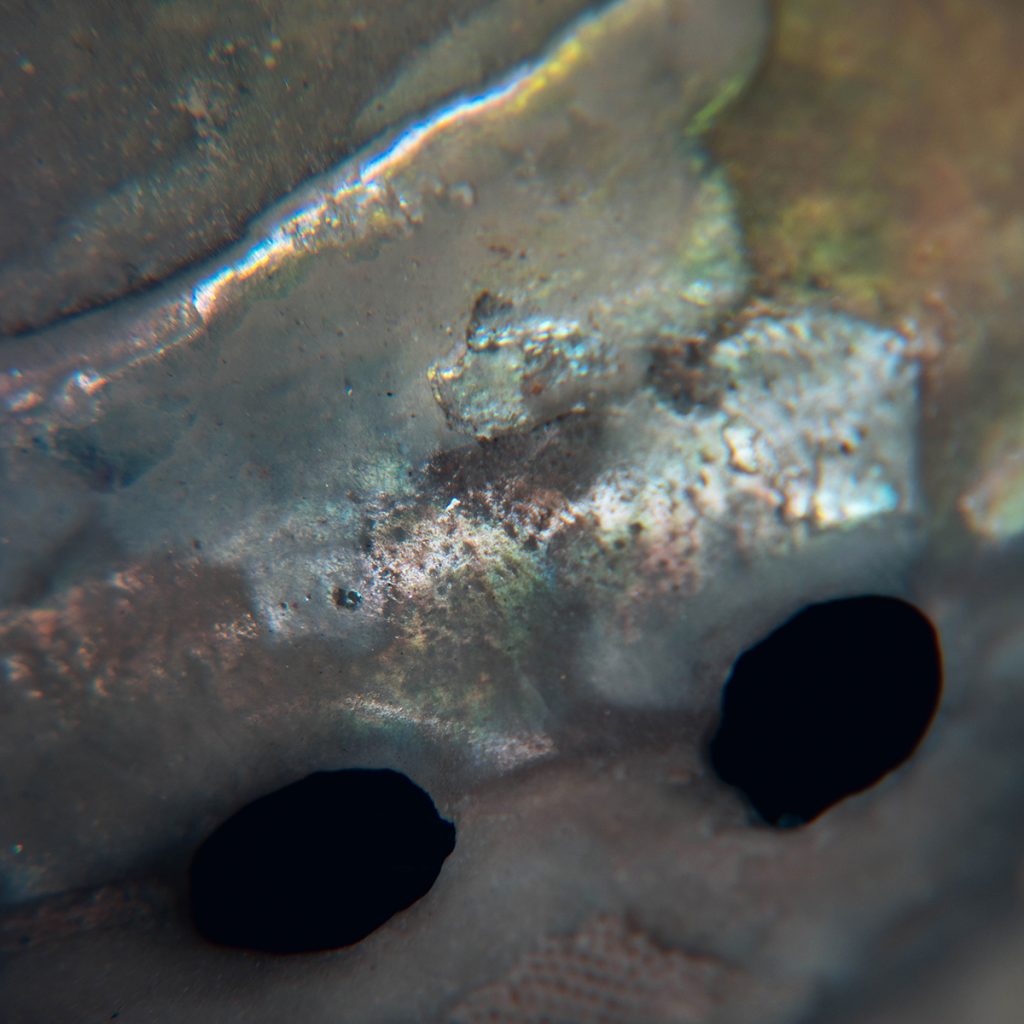
This plate captures a paired formation within the Pitted Reaches, where two adjacent vents puncture the surface in close proximity, their size and shape notably similar. The openings are smooth and well-defined, with minimal fracturing at their edges, suggesting a controlled or repeated process rather than random failure. The surrounding terrain appears slightly elevated and contoured between the two voids, as though the surface has adjusted to accommodate their presence. Subtle mineral variation and faint surface sheen indicate localized alteration, possibly tied to the same mechanism responsible for both vents. Unlike isolated pits observed elsewhere, these features read as linked—either formed simultaneously or influenced by a shared underlying structure. The result is a formation that feels coordinated, a small but precise disruption that implies a pattern extending beyond the immediate frame.