
UNKNOWN WORLD II
Unknown World II presents as a surface in active transformation rather than stable terrain, composed of densely clustered nodules that organize into ridges, strata, and eruptive formations with distinctly different behaviors across sharply defined zones. Color regions—ranging from deep indigo and cyan to violent magenta and saturated green—do not blend but replace or resist one another, suggesting competing or interacting surface states rather than passive geology. Some areas record layered cycles of prior growth, while others advance, spread, or rise in tangled, directional structures, implying a system that is both memory and motion at once. There is no clear boundary between landscape and organism; the entire surface behaves as if it is in the process of becoming something, with the persistent and unsettling implication that it may not be finished—and may not be indifferent to observation.
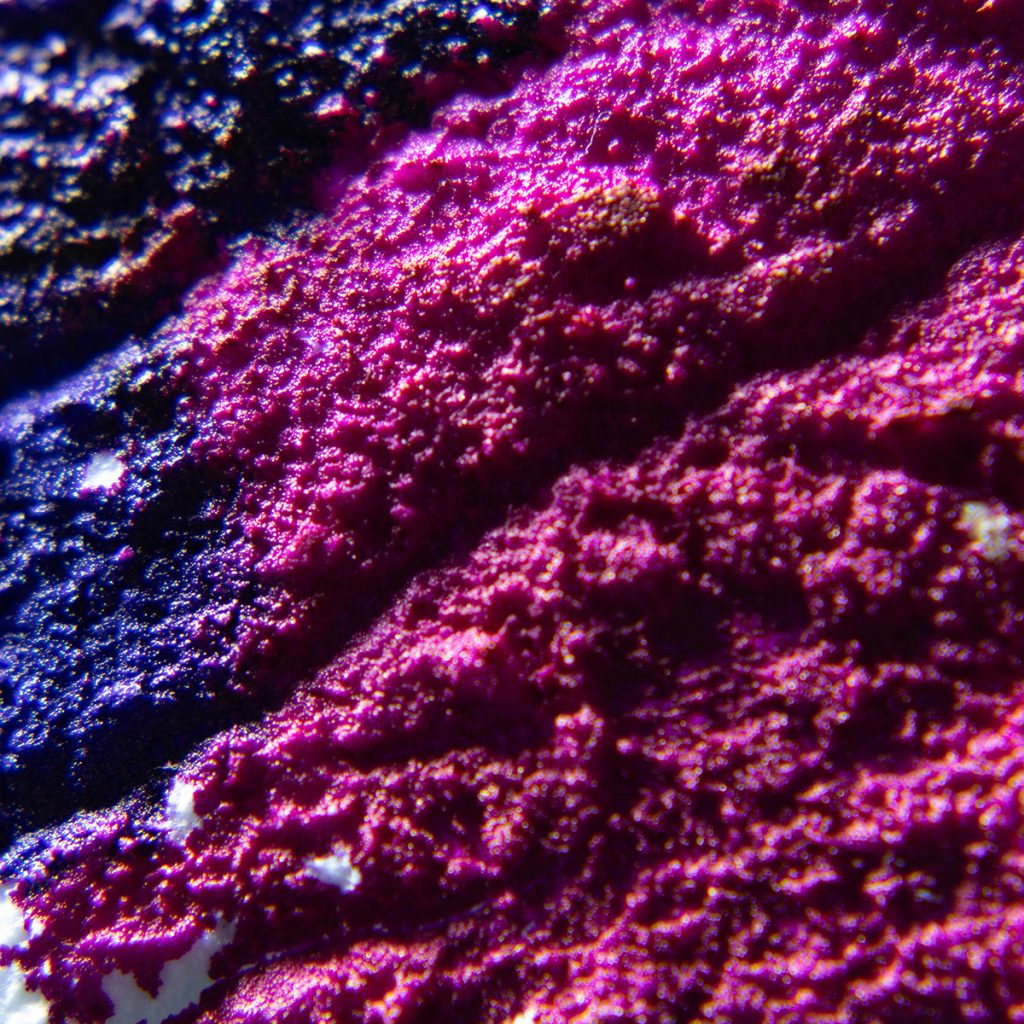
The Crimson Escarpment forms a sharp, territorial divide where a dense magenta bloom rises abruptly from darker terrain, not blending but replacing it. The nodular structures here are swollen and tightly packed, building upward in layered surges that suggest active expansion rather than passive formation. The boundary is aggressive and uneven, with larger, irregular nodules clustering near the crest as if mid-growth. This region reads less like landscape and more like encroachment—an advancing front where one surface state is overtaking another.
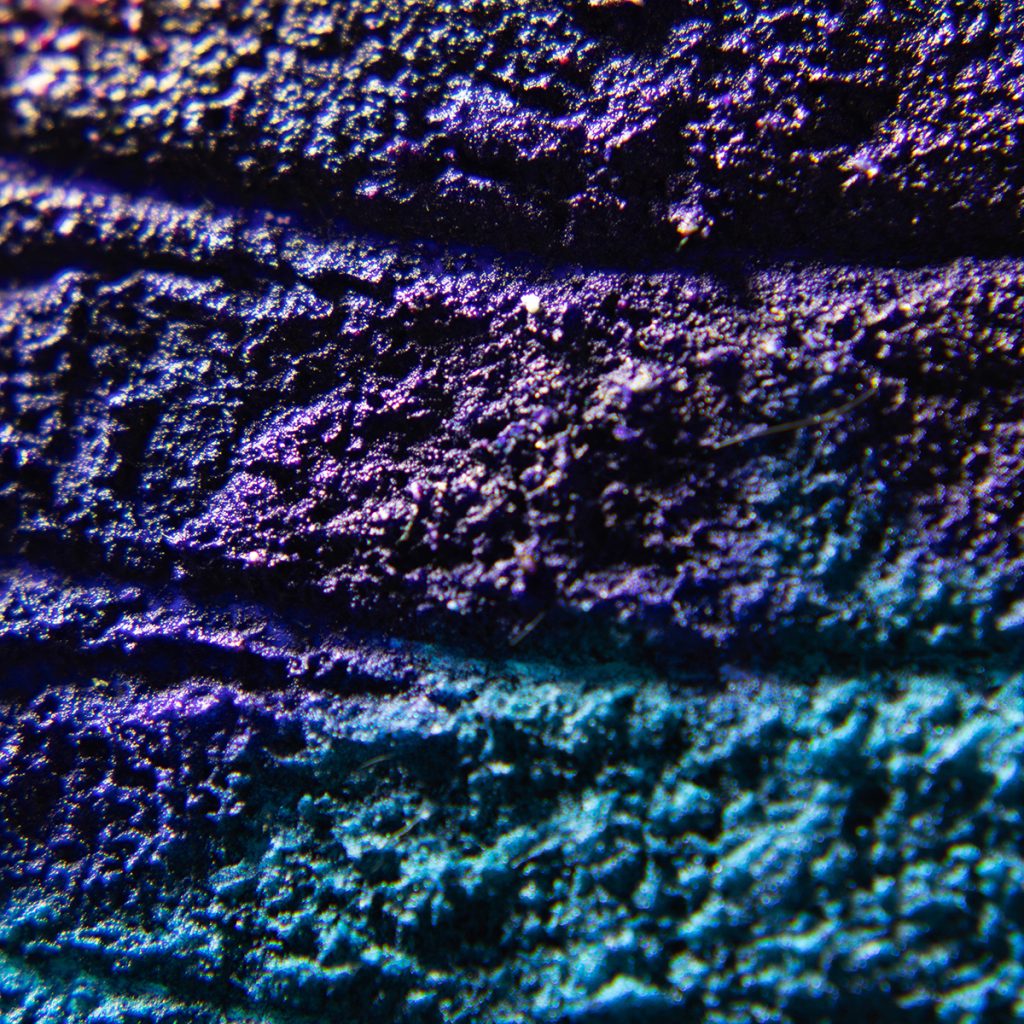
The Indigo Basin settles into horizontal bands of tightly clustered nodules, forming layered strata that suggest cycles of growth and compression rather than geological deposition. Color shifts from deep indigo to cooler cyan tones across the bands, with mostly uniform structures interrupted by occasional bulges that hint at pressure or reactivation beneath the surface. Unlike more aggressive regions, this area feels stabilized—less an active front than a record of prior states, holding the imprint of what this world has already been.
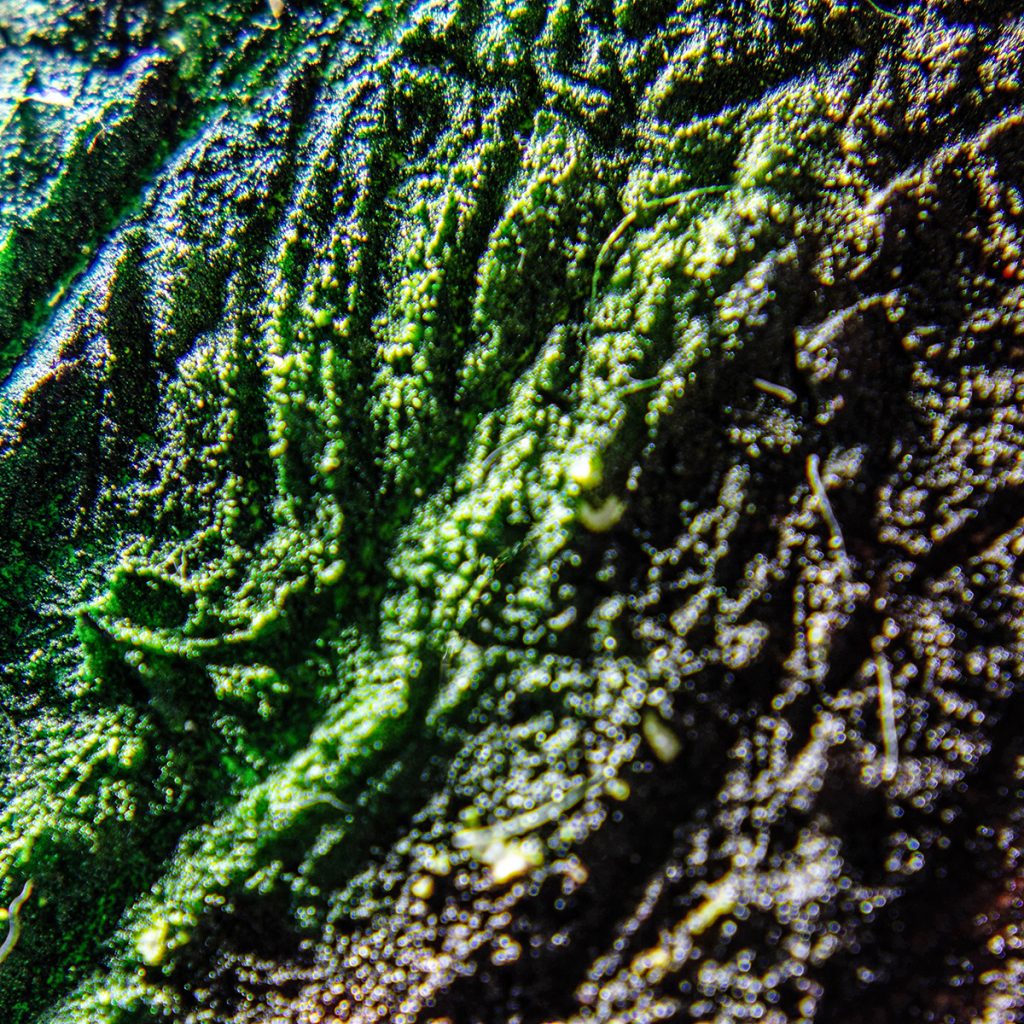
The Emerald Tangle abandons layered order entirely, erupting into dense, vertical formations that twist and interweave like tendrils or fibers under tension. Saturated green nodules vary in size and density, forming structures that appear to reach and spread rather than simply grow. The edges of the region are frayed and irregular, suggesting outward expansion into adjacent terrain. This is not passive development but directed activity—a system in motion, threading itself forward.
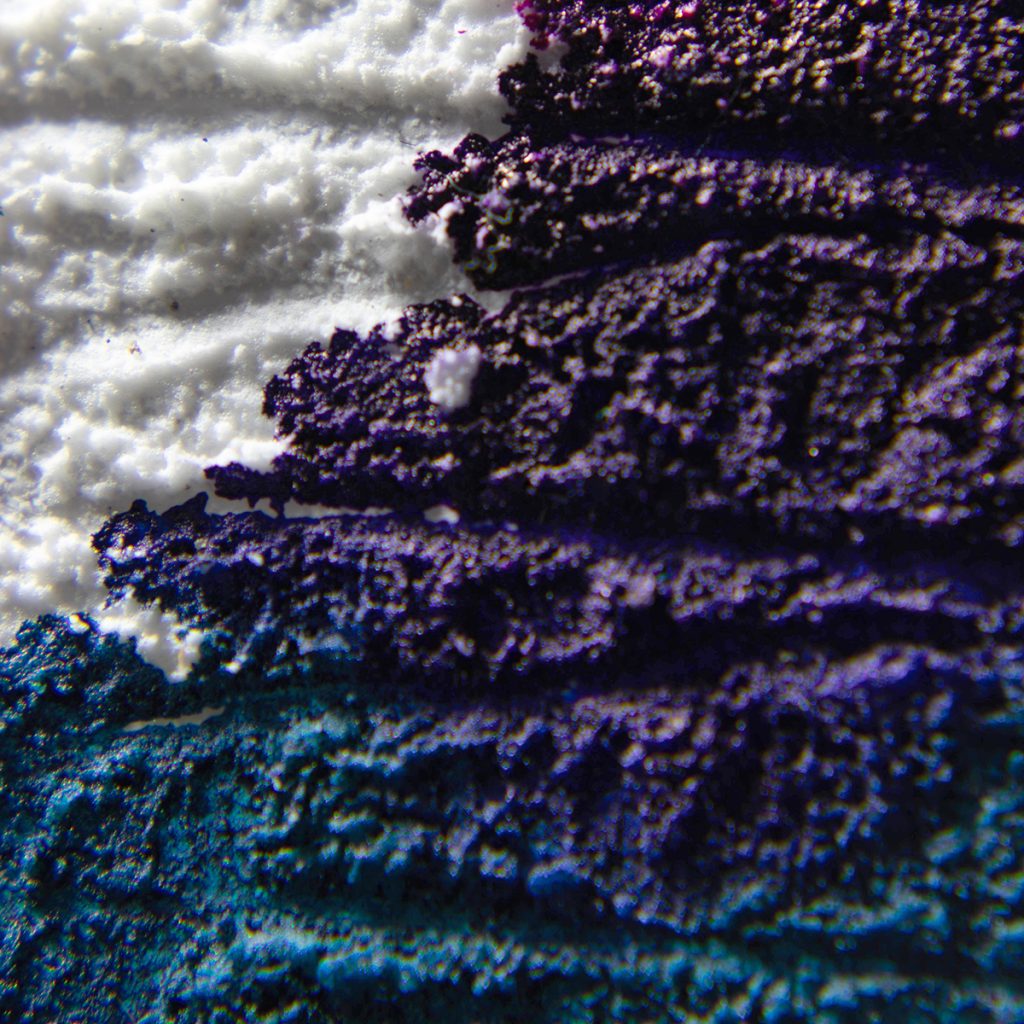
The Frostfall Cliffs rise in layered, indigo-violet ridges that terminate abruptly against a pale, granular field unlike any other surface on the world. The dark formations resemble uplifted strata, fractured into ledges and overhangs, while the adjacent bright region appears loose and particulate, lacking the dense nodular structure seen elsewhere. The boundary is stark and resistant, with fragments breaking away but failing to integrate, suggesting an incompatibility between the two zones—a point where expansion halts, or is actively held back.