
SPLINTER BELT
THE CRUMBLEFIELDS
The Crumblefields stretch across a wide interior zone of the Splinter Belt, where once-solid formations have degraded into unstable, porous masses. The surface is riddled with voids and microfractures, suggesting prolonged stress rather than a single catastrophic event. Dark mineral deposits—or possibly foreign particulates—have settled into the cavities, forming irregular patterns that resemble decay. Traversal is strongly discouraged; several probes have partially collapsed into the substrate with minimal pressure.
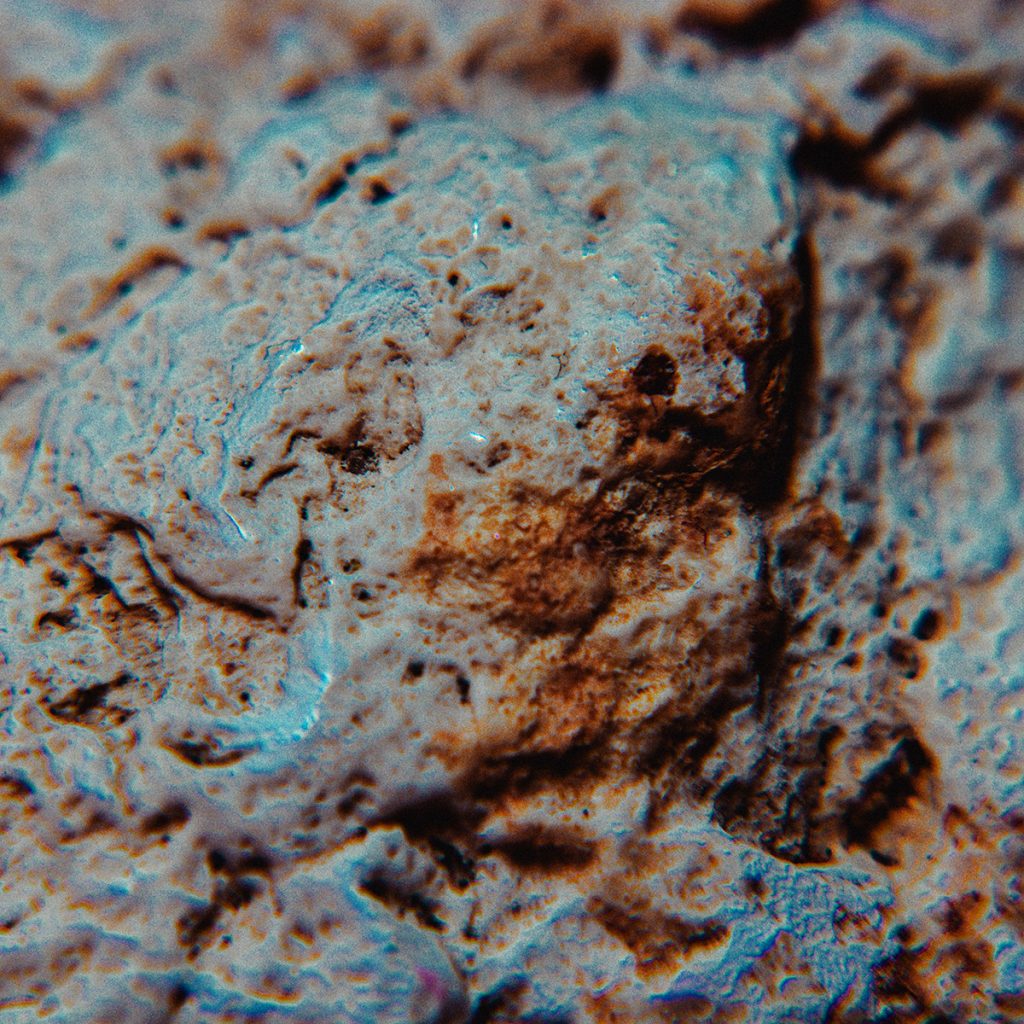
This fractured fragment was recovered from the outer edge of the Crumblefields, where structural integrity appears to have failed from within rather than from external impact. The surface is porous and unstable, with irregular cavities filled by darker deposits of unknown origin. Under minimal pressure, the material shows signs of collapse, suggesting that what remains is not solid in the traditional sense, but a weakened lattice in the final stages of disintegration.
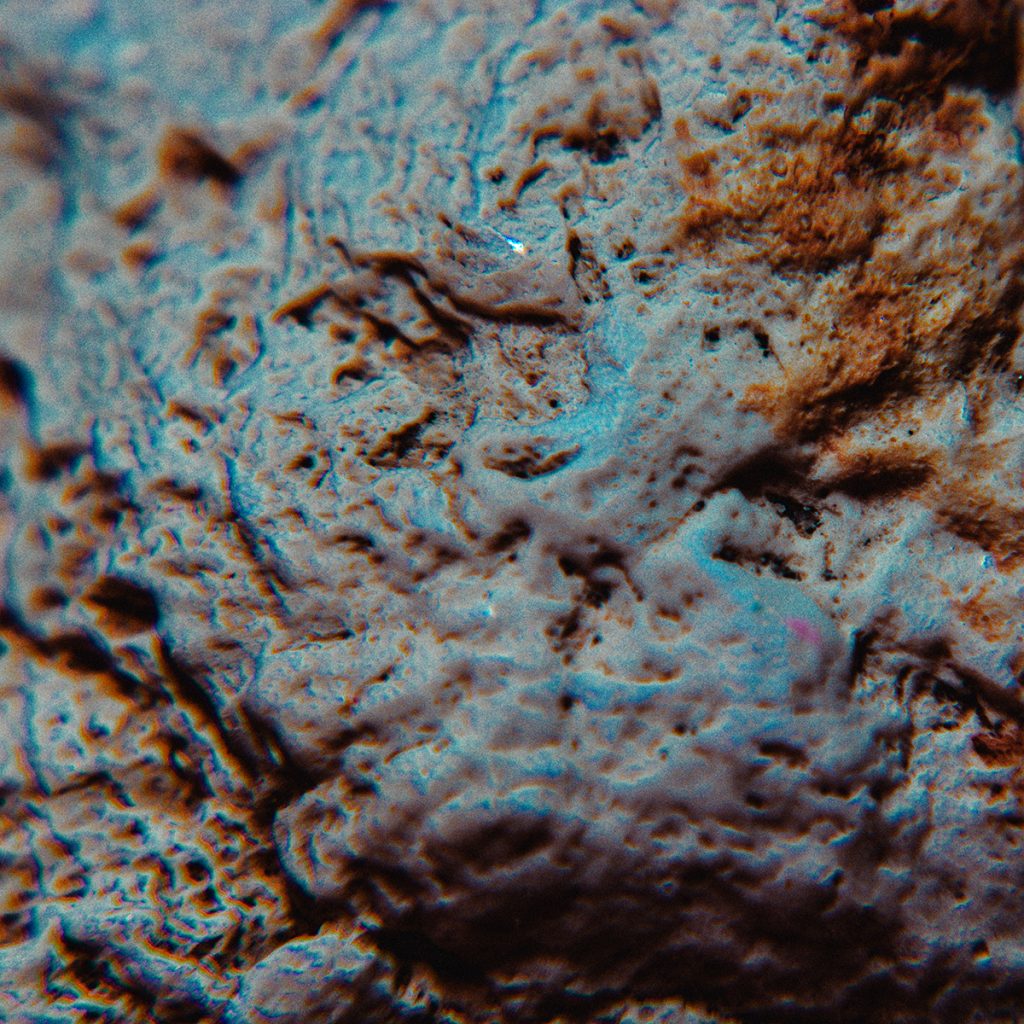
The Shattered Plain extends across wide sections of the Crumblefields, where the surface appears deceptively continuous despite extensive internal failure. Fine fractures and shallow depressions form irregular networks across the terrain, giving the impression of solidity while concealing a compromised substrate beneath. Darkened regions suggest the accumulation of particulate matter within microvoids, further weakening the structure. Movement across this surface is considered hazardous; collapse events have been recorded without visible warning.
THE SHEARFACE RIM
The Shearface Rim marks one of the outermost fracture lines of the Splinter Belt. The material here shows signs of catastrophic separation—fibrous layers pulled and compacted under extreme force, then softened by time or atmosphere. Dark inclusions dot the surface like scars that never fully healed. Instruments register subtle structural instability beneath the crust, suggesting this region may still be… shifting.
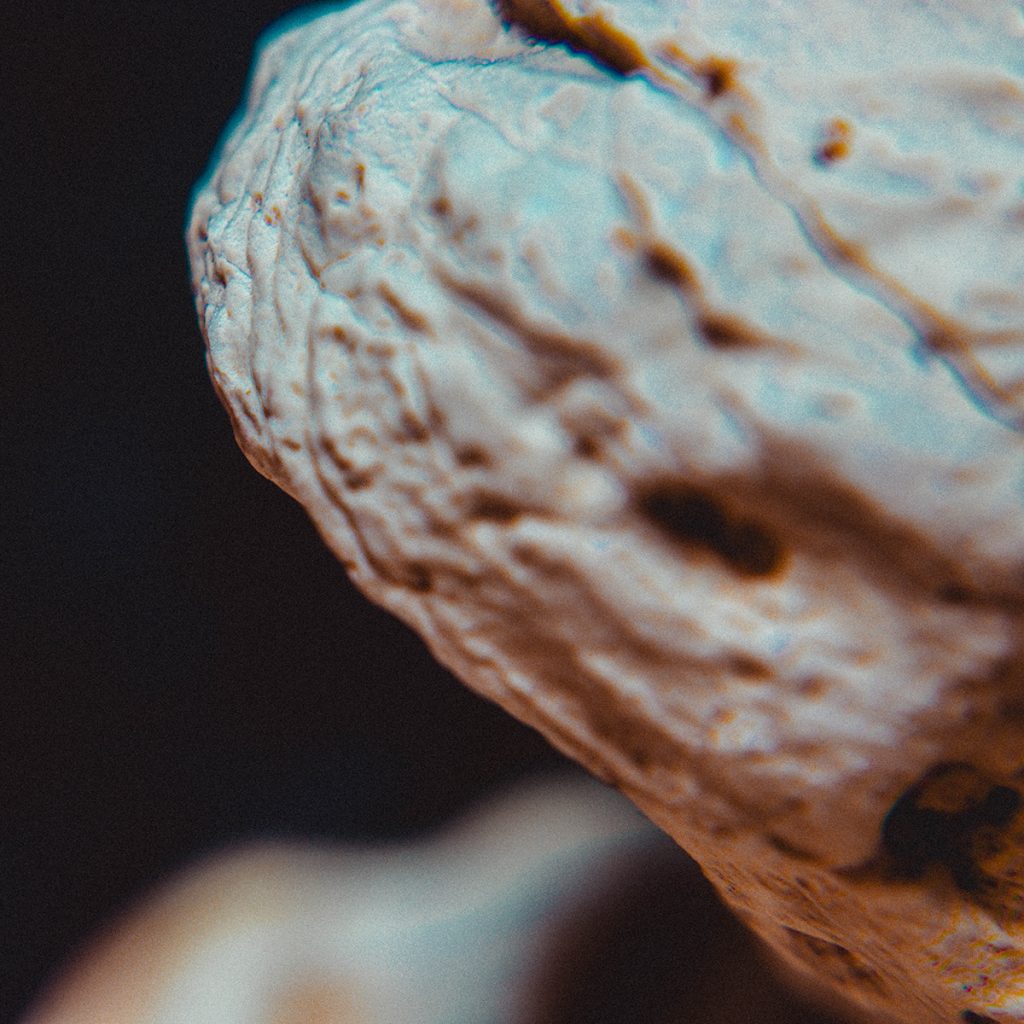
THE STRESSWEB FLATS
The Stressweb Flats are characterized by a dense network of branching fissures that radiate across otherwise intact surfaces. Unlike the surrounding Crumblefields, the substrate here retains structural cohesion, but only barely. The fracture lines form repeating, web-like geometries, suggesting cyclical expansion and contraction—possibly thermal, possibly tidal, possibly something less understood. Instruments detect faint resonances beneath the surface, as though the material is still under tension and responding to unseen forces.
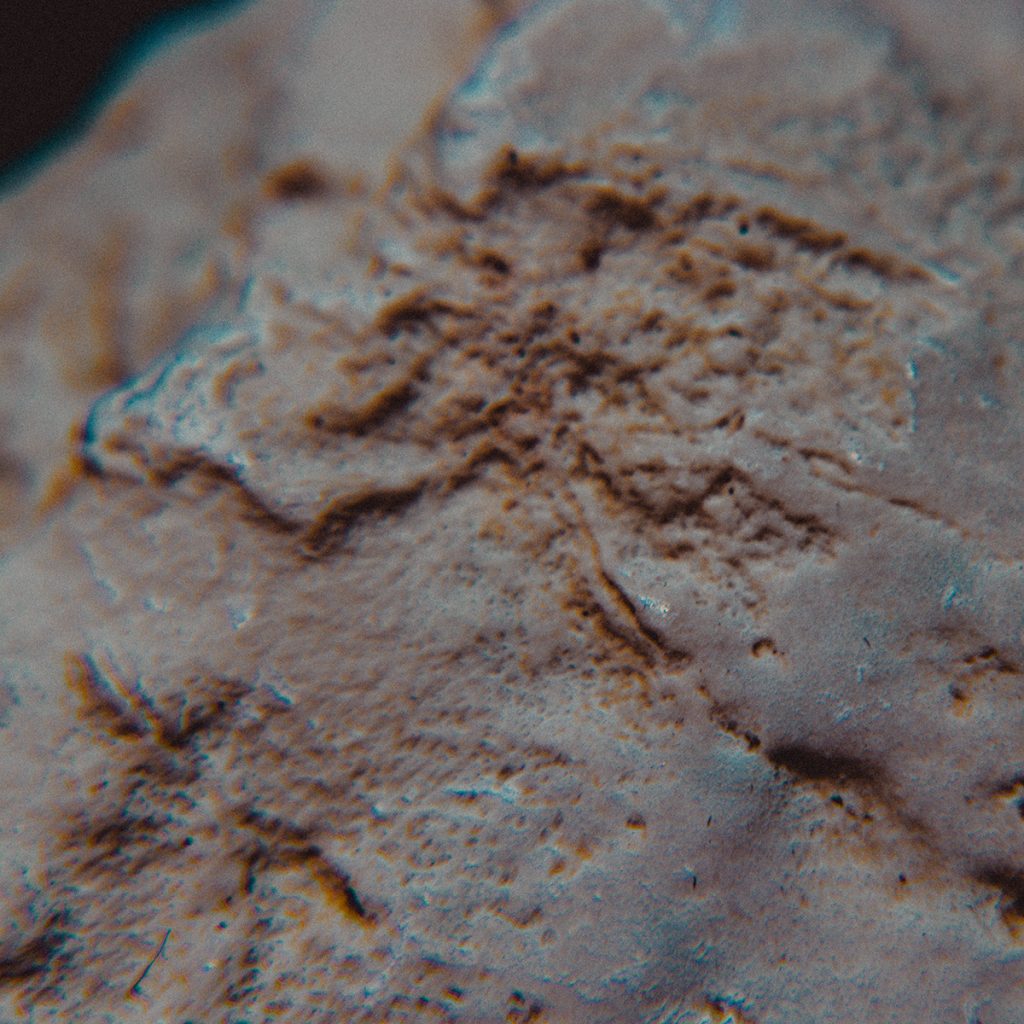
The Radial Fracture Basin disrupts the otherwise uniform stress patterns of the Flats, marking a localized failure point within an already strained substrate. Fractures extend outward from a central depression, cutting across established stress lines rather than following them. This indicates a sudden release of pressure from beneath the surface, distinct from the cyclical strain observed across the surrounding terrain. The basin has shown no further expansion since initial observation, though residual tension persists in adjacent material.