
THALOS MINOR–MOON OF LIGNUM
Thalos Minor orbits Lignum as a pale, unstable remnant, its surface marked by fracture, collapse, and slow dissolution. What appears at a distance to be a solid body reveals, upon closer inspection, a porous and failing structure—its crust riddled with cavities, weakened shelves, and exposed interior layers.
Regions across the moon suggest a history of internal pressure and subsequent collapse. In some areas, the surface has buckled outward; in others, it sinks inward without warning. Wide expanses show continuous erosion, as though the material itself is gradually disintegrating. Isolated zones bear signs of alteration, their darker, fused textures hinting at events not observed elsewhere on the moon.
Thalos Minor is not inert. It is in the process of becoming less so.
THE EMBER CRUST
The Ember Crust is distinguished by a darker, subtly altered surface that contrasts with the surrounding pale terrain. The material appears more compact and faintly fused, with softened cavities and reduced surface fragmentation. This region suggests localized thermal or chemical transformation, differing from the primarily erosive processes observed elsewhere. The origin of this alteration remains undetermined.
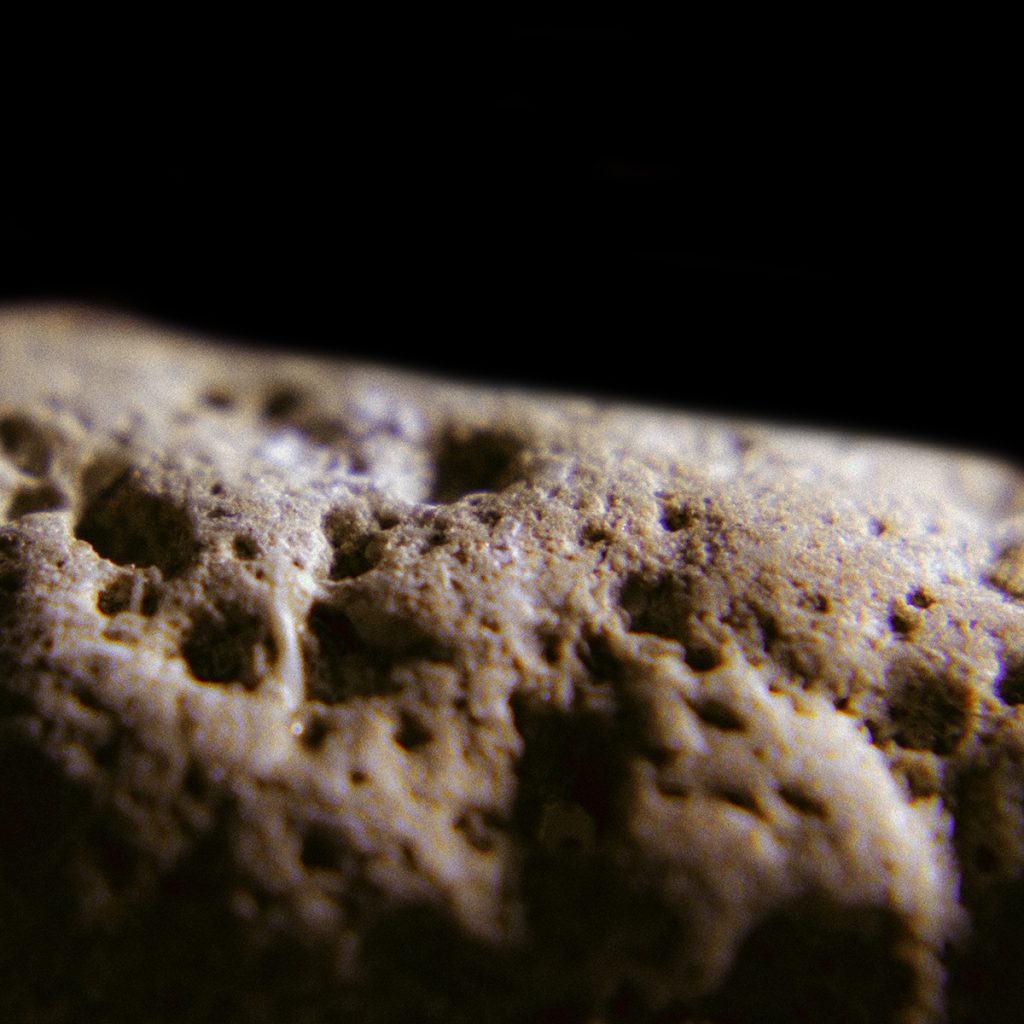
The Distant Rim marks a gently curving boundary along Thalos Minor’s surface, where the terrain rises into a softened horizon before dropping away into shadow. The material here appears compacted yet heavily pitted, with rounded cavities suggesting long-term degradation rather than sudden collapse. Subtle tonal variation distinguishes this region from the surrounding pale crust, hinting at prior alteration or exposure. Though visually stable, the Rim bears the same underlying fragility observed across the moon, with no clear indication of structural integrity beneath its surface.
THE BREACH RIDGES
The Breach Ridges are defined by uneven, raised formations where the surface appears to have buckled outward. These ridges are marked by clustered cavities and irregular contours, indicating stress within the underlying structure. The surrounding terrain shows signs of displacement, as though the crust was forced upward before weakening. The formations remain intact, though their long-term stability is uncertain.
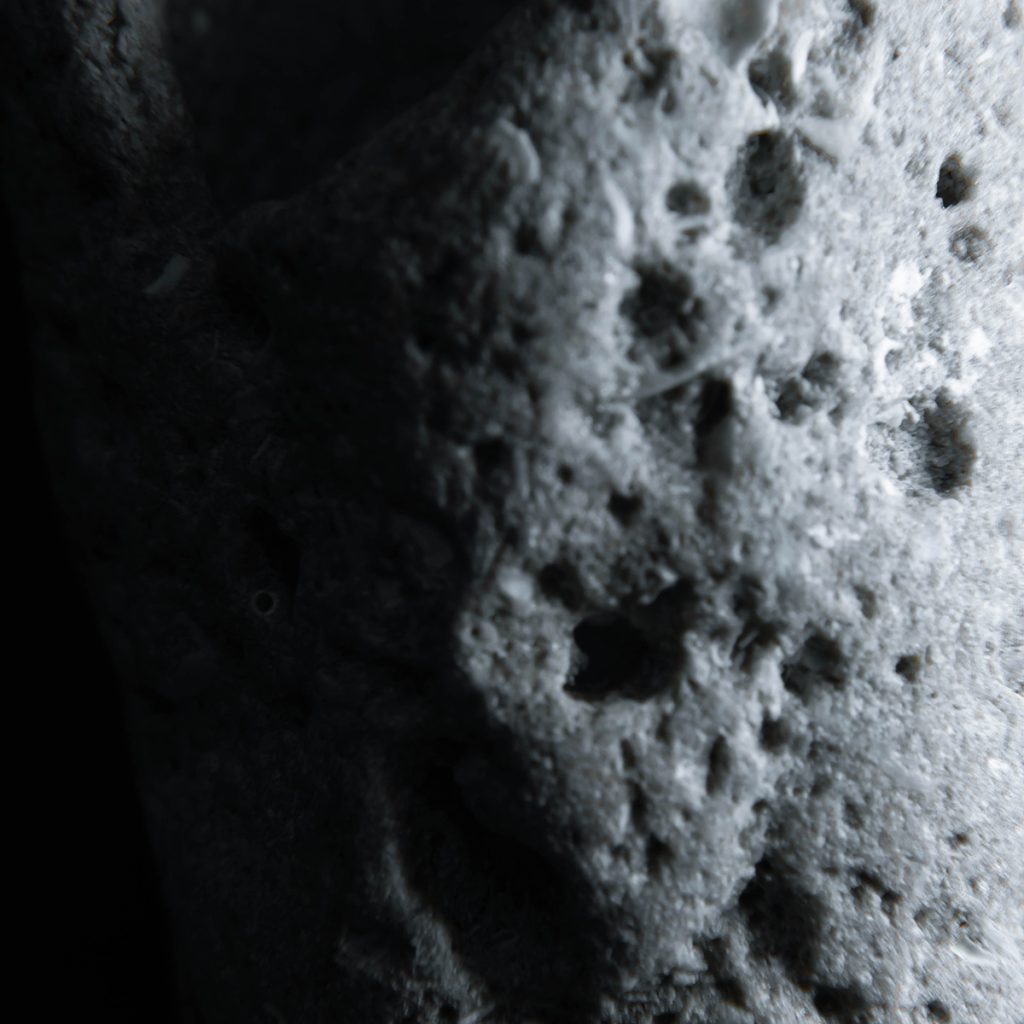
The Shadow Craters occupy a fractured boundary along the Breach Ridges, where the surface falls abruptly into darkness. Cavities here are deeper and more sharply defined than in surrounding regions, their interiors absorbing light and obscuring depth. The terrain suggests a point of structural failure, where the outer crust has given way to reveal a more porous inner layer. Illumination fades quickly across this region, and visual assessment of stability remains unreliable.
THE DRIFTFACE
The Driftface covers wide, gently curving expanses of Thalos Minor, characterized by fine, evenly distributed pitting across an otherwise continuous surface. The terrain appears largely intact, though subtle depressions and occasional deeper cavities indicate ongoing material loss. The erosion here is gradual and consistent, suggesting a pervasive process affecting the moon as a whole. Structural weakness is present but not immediately apparent.
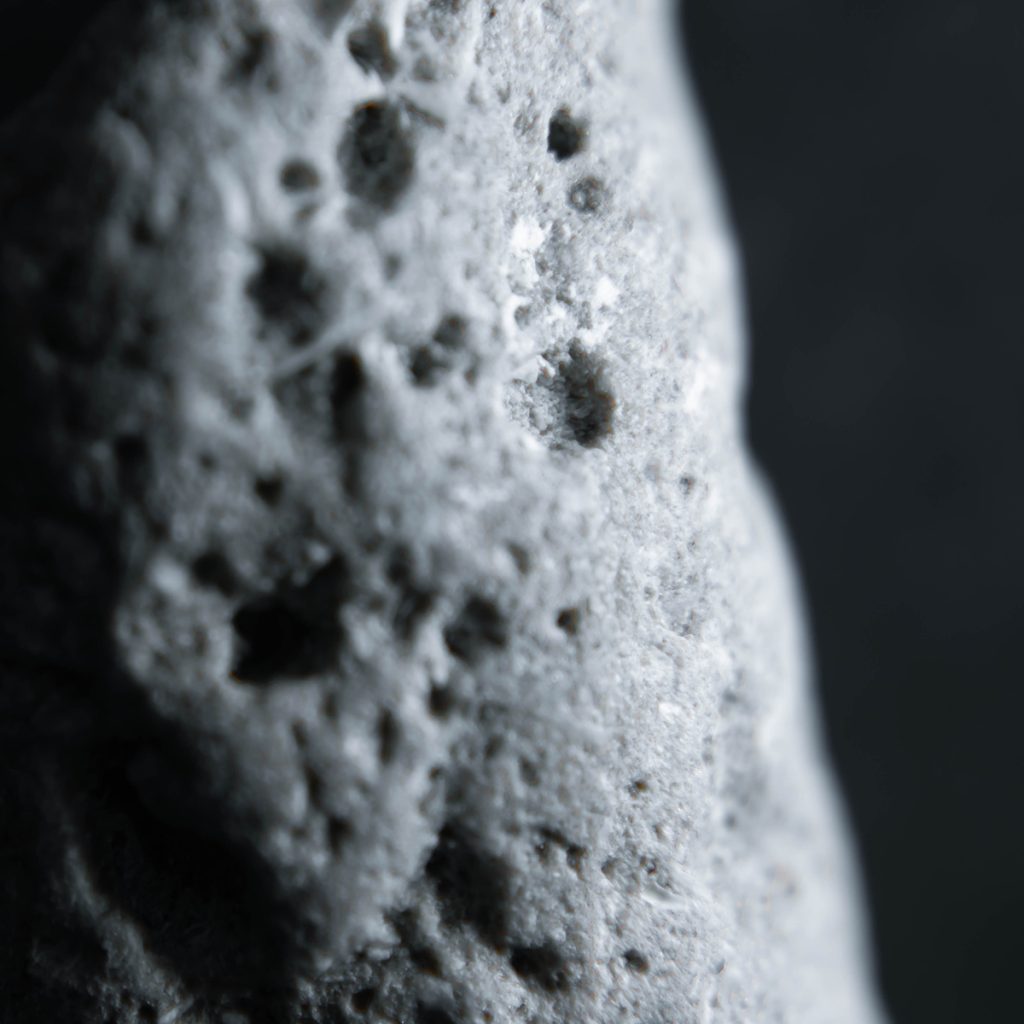
Hollow Crater lies along the Driftface, where the surface curves gently and appears largely intact. The terrain is marked by fine, evenly distributed pitting, with occasional deeper cavities interrupting the otherwise uniform texture. These depressions show no clear structural reinforcement and may extend further beneath the surface than visible. The region presents minimal immediate instability, though the consistency of its erosion suggests a continuous, underlying process affecting the entire area.
THE ERODED PILLARS
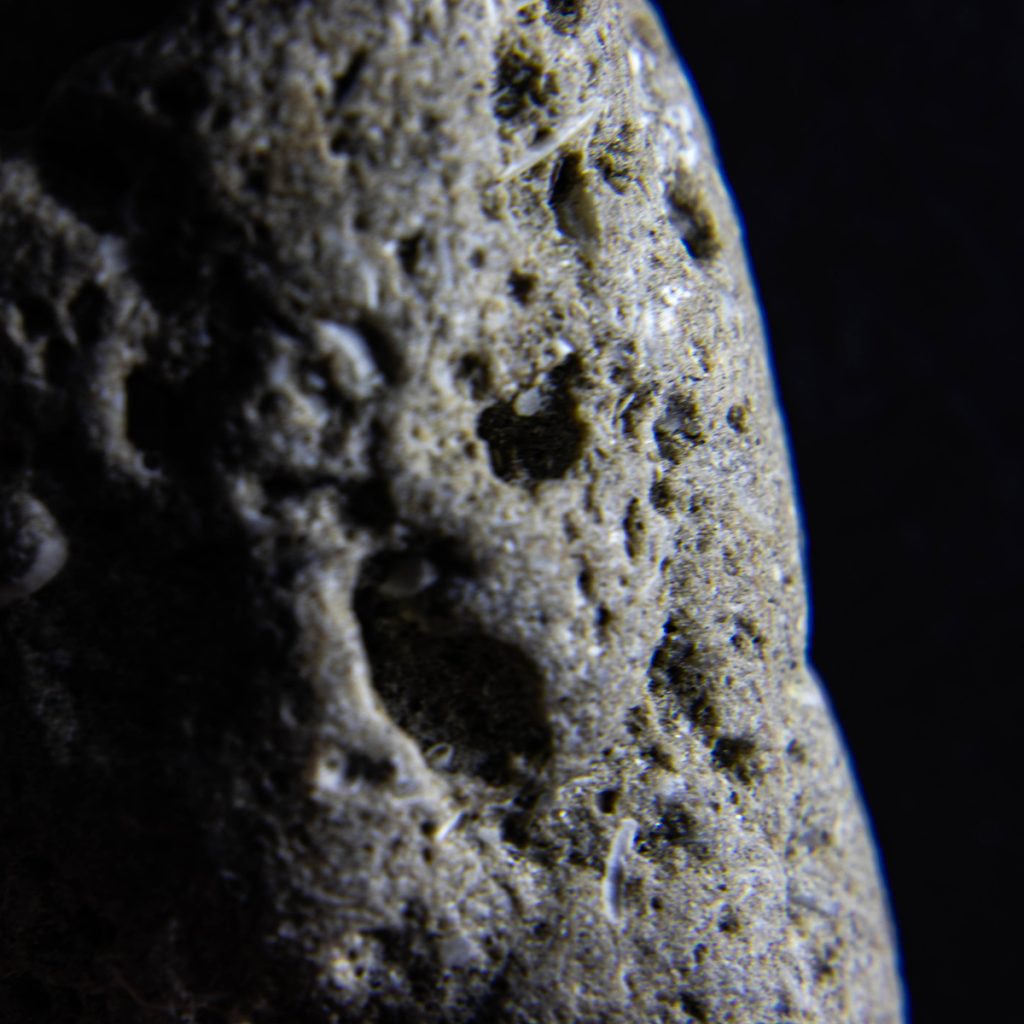
The Silent Asteroid presents as a compact, isolated mass within the Eroded Pillars, its surface more cohesive than surrounding formations yet equally marked by deep, irregular cavities. The structure appears denser, withstanding the widespread collapse evident elsewhere, though its interior remains extensively hollowed. Its relative stability suggests a remnant of earlier material, preserved while less resilient regions have given way. No movement or active change has been observed, though its long-term persistence remains uncertain.
THE FRACTURE FACE
The Fracture Face marks a pronounced break in Thalos Minor’s outer crust, where the surface drops sharply to reveal a heavily pitted interior layer. The transition between exterior and interior material is abrupt, with no gradual weathering between them. Cavities within the exposed face are irregular and deeply set, suggesting a point of structural failure rather than uniform erosion. This region provides the clearest view of the moon’s internal composition.
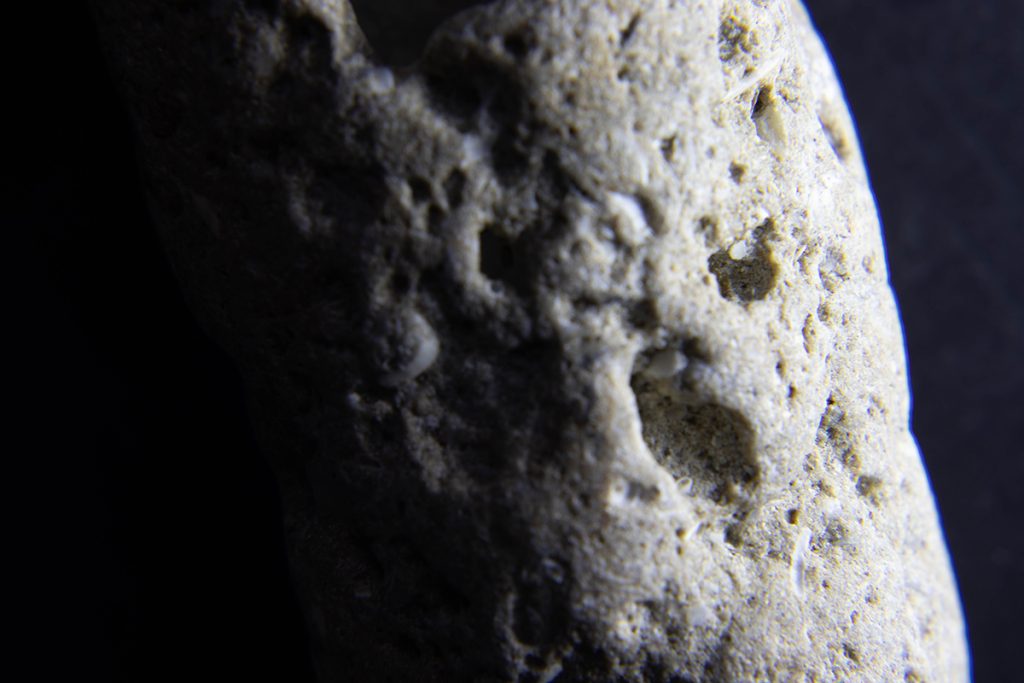
First Contact marks a prominent exposure along the Fracture Face, where the outer crust of Thalos Minor has split to reveal a densely pitted inner layer. The transition between surfaces is abrupt, with no gradual weathering between exterior and interior material. Cavities here are irregular and varied in depth, suggesting a localized disruption rather than uniform decay. The region’s distinct structure and tonal variation indicate it may represent one of the earliest sites of structural failure—or the point at which an external influence first altered the moon’s surface.
THE HOLLOW VERGE
The Hollow Verge forms a thinning boundary along Thalos Minor’s surface, where the crust tapers into fragile edges and isolated openings. Cavities here are sharply defined and often singular, suggesting localized penetration or focused erosion rather than widespread collapse. The surrounding material appears smoothed and recessed, with subtle indications of subsurface voids extending beyond visible limits. Stability along the Verge is unreliable, as the surface offers little resistance at its margins.
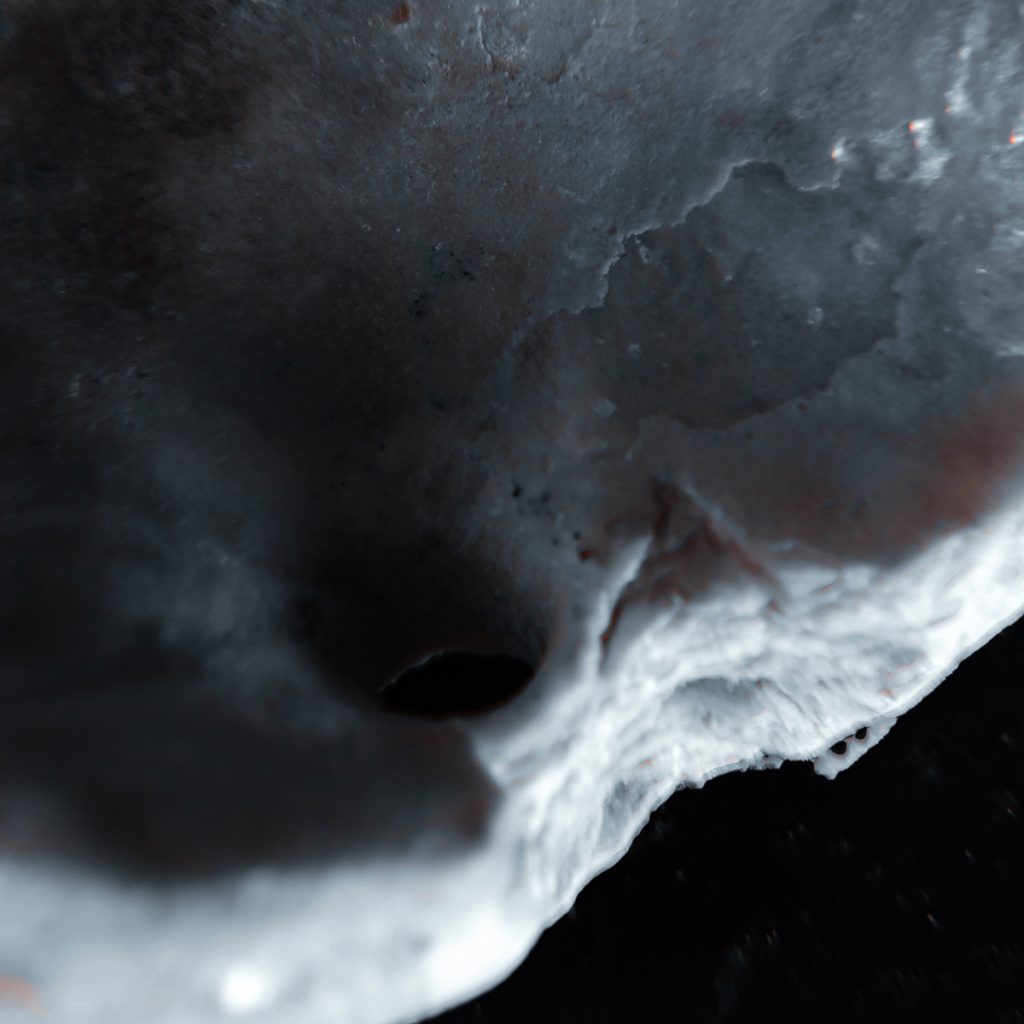
The Borehole lies along the Hollow Verge, where the surface thins to a fragile lip surrounding a sharply defined opening. Unlike the broader pitting seen elsewhere, this cavity is singular and deeply shadowed, with a form suggesting penetration rather than collapse. The surrounding material appears smoothed and slightly recessed, as though worn by sustained contact or internal movement. No base or termination point is visible within the opening, and its depth remains undetermined.
THE PITTED SHELF
The Pitted Shelf spans broad, level sections of the moon’s exterior, presenting an initially stable terrain disrupted by dense clusters of cavities. These depressions vary in size and depth, frequently connecting beneath the surface to form an unstable underlayer. The material retains a granular, worn quality, indicating prolonged degradation rather than sudden failure. Despite its plateau-like appearance, the Shelf is structurally compromised throughout.
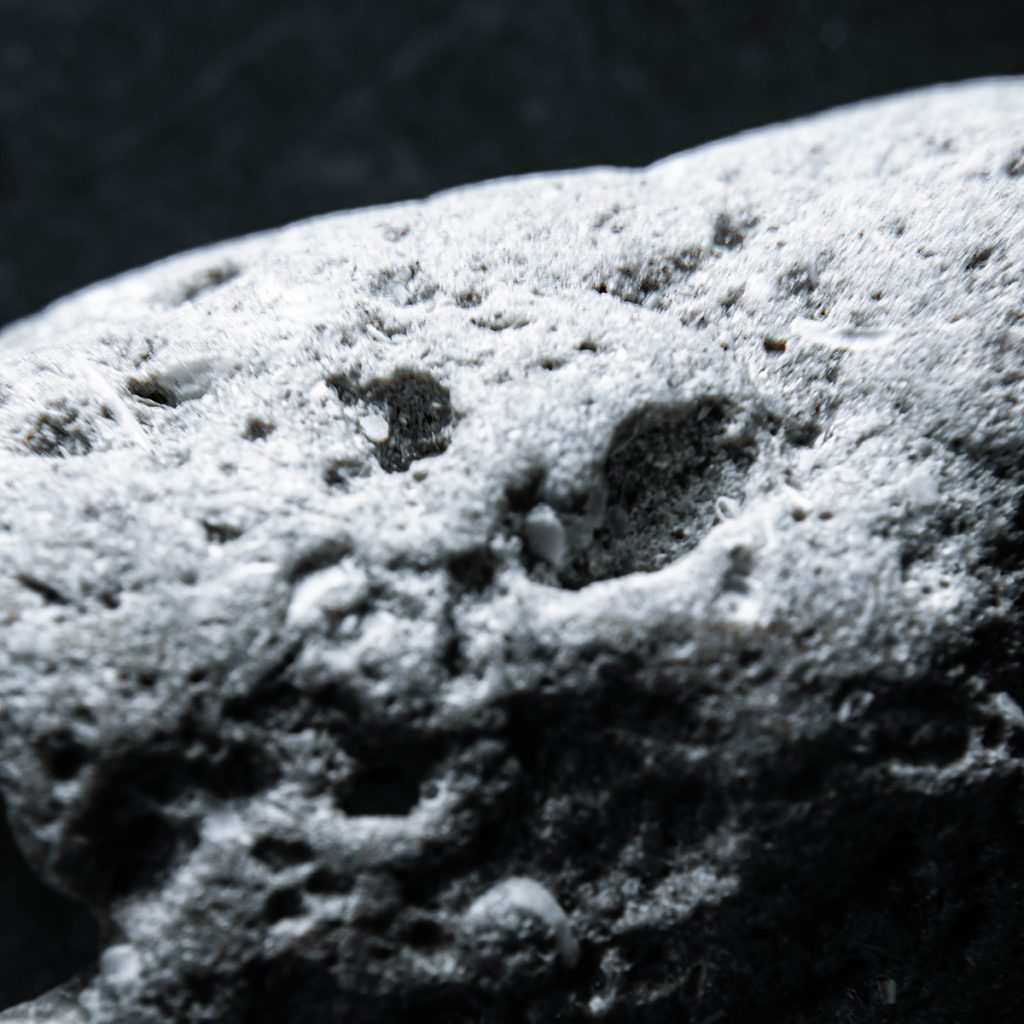
The Ash Plateau extends across a broad section of the Pitted Shelf, presenting a relatively level surface that appears stable at a distance. Closer inspection reveals a dense field of cavities and softened depressions, with the underlying structure heavily compromised. The material here has a fine, granular quality, as though worn down over time rather than fractured outright. Subsurface voids are evident along the plateau’s edge, indicating that the apparent solidity of this region may be largely superficial.
THE SINKFIELDS
The Sinkfields are regions of subtle but persistent inward collapse, where the surface settles unevenly into underlying voids. Depressions emerge gradually, often deepening without clear boundaries, and may extend beyond what is visible from the surface. The material here appears loosely bound, with a diffuse texture that obscures structural continuity. Traversal across the Sinkfields is unpredictable due to the absence of clearly defined stable ground.
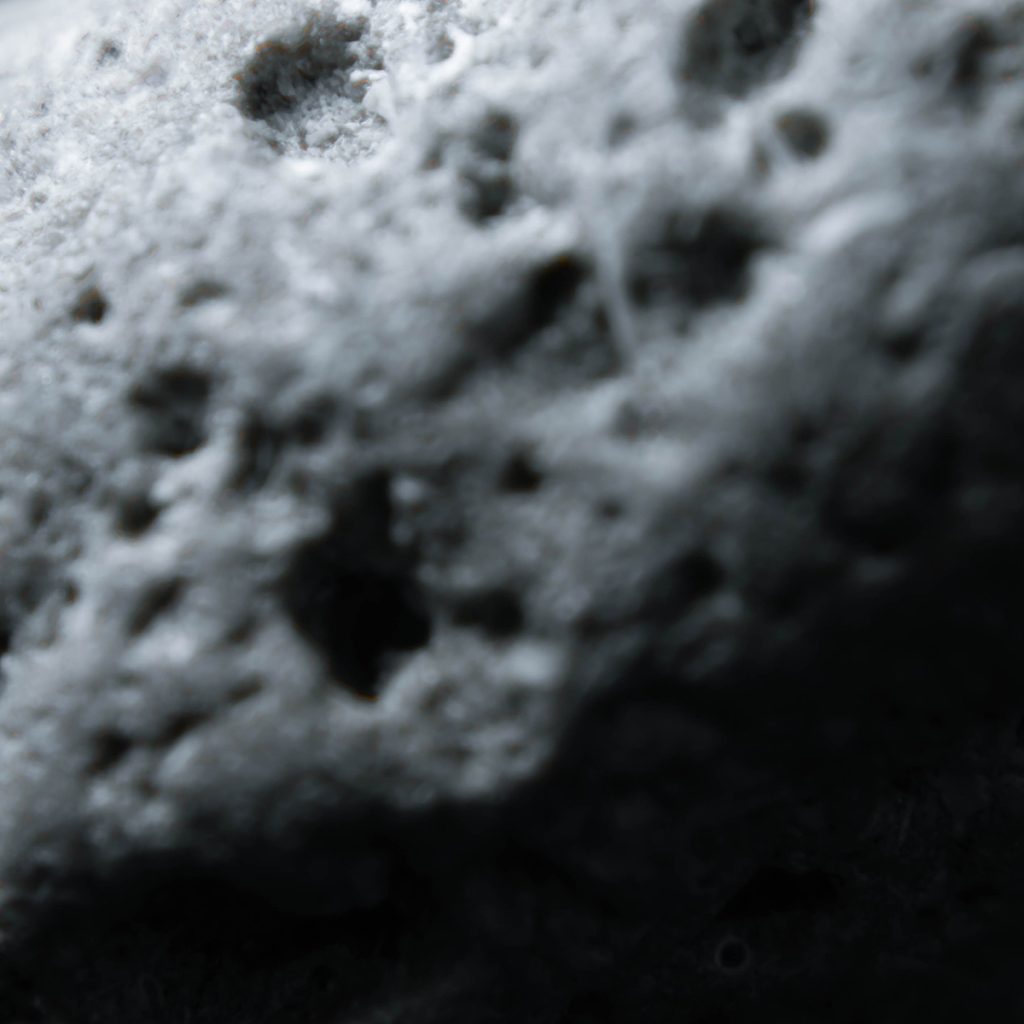
Through the Dust captures a section of the Sinkfields where the surface appears diffuse and loosely bound, with fine material obscuring the boundaries of deeper voids. Depressions emerge gradually from the surrounding terrain, offering little visual distinction between stable ground and subsurface collapse. The texture suggests ongoing inward settling, with material shifting at a scale too subtle to observe directly. Movement across this region is uncertain, as the surface provides no reliable indication of its own continuity.